Health & dental
Chihuahua hypoglycemia: the first aid every new owner needs
A blood sugar crash is the number one safety topic for a tiny puppy. Learn the signs, keep honey in the house, and know what to do in the first five minutes.
Nelson and Kim, Curious Tails · AVS licence AS24J00046· Updated 24 July 2026
What do you do for Chihuahua hypoglycemia?
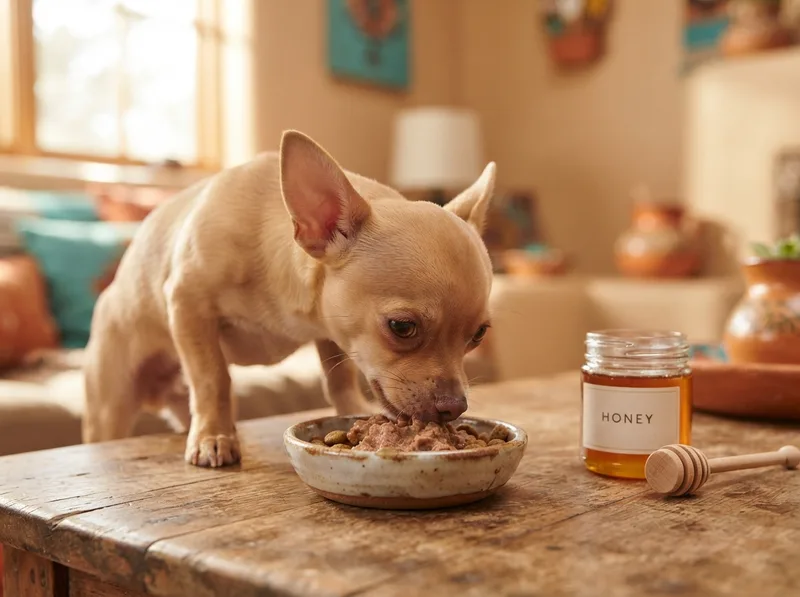
At the first sign of a blood sugar crash, wobbliness, lethargy, a cold body, a glazed look, rub honey or a glucose gel onto the gums straight away; it absorbs without swallowing. Warm the puppy at the same time. Once it can swallow, feed a meal, then see a vet the same day. Prevent it with small, frequent feeding and warmth. It fades as the puppy grows to its normal adult size.
What hypoglycemia is, and why tiny puppies are prone to it
Hypoglycemia means low blood sugar. In a very young, very small puppy the body simply does not carry much reserve, so a long gap between meals, a burst of excitement, a cold room or a bit of stress can drain the fuel faster than the puppy can replace it. The result is a blood sugar crash that can come on within an hour and, left untreated, becomes a genuine emergency.
This is the number one safety topic for anyone bringing home a Chihuahua puppy, and it is precisely why we build every new owner’s first week around frequent feeding. It is not a defect in the puppy. It is normal toy-breed physiology in the first few months of life, and it fades as the puppy grows into its normal adult size and builds proper reserves.
It also sits at the heart of why we refuse the whole "teacup" marketing story. A puppy deliberately kept undersized, or a runt sold at a premium as a "micro" or "pocket" dog, carries even less reserve and stays fragile for longer. The honest truth is the opposite of the sales pitch: smaller is not more precious, it is more at risk of exactly this. A correctly sized Chihuahua that grows normally leaves this vulnerable window behind.
Do not let any of this frighten you off the breed. Most well-bred, correctly sized Chihuahua puppies never have a single episode, because a sensible feeding routine keeps the tank topped up and the risk simply passes with age. The point of knowing about it is not worry, it is readiness: an owner who understands low blood sugar, keeps honey in the cupboard, and feeds little and often has already removed almost all of the danger. Forewarned is, quite literally, forearmed here.
The warning signs, from subtle to serious
Catching a crash early is everything, so learn the signs before you ever need them. The first hints are subtle: a puppy that was bouncing suddenly goes quiet, seems lethargic, and stumbles or looks wobbly on its feet. Its body may feel cool to the touch, and its gums can look pale rather than healthy pink.
As it worsens the puppy becomes weak and disoriented, the eyes take on a glazed, faraway look, and it may not respond to its name. Without sugar reaching the brain, the final stage is collapse, seizures or unconsciousness. You do not want to wait to see how far it goes; act at the first quiet, wobbly, cool phase.
A useful habit for the first weeks: if your Chihuahua puppy has been very active, has skipped a meal, or has had a stressful or chilly stretch, check on it. A puppy that is a little too still and a little too cold is telling you something. Treat it as low blood sugar until proven otherwise, because the treatment is harmless if you are wrong and lifesaving if you are right.
Signs of a blood sugar crash
- Sudden lethargy after being active or after a missed meal
- Wobbliness, stumbling, or weakness in the legs
- A body that feels cold to the touch; pale gums
- A glazed, unfocused, faraway look in the eyes
- Collapse, tremors or seizures in a severe crash
First aid: what to do in the moment
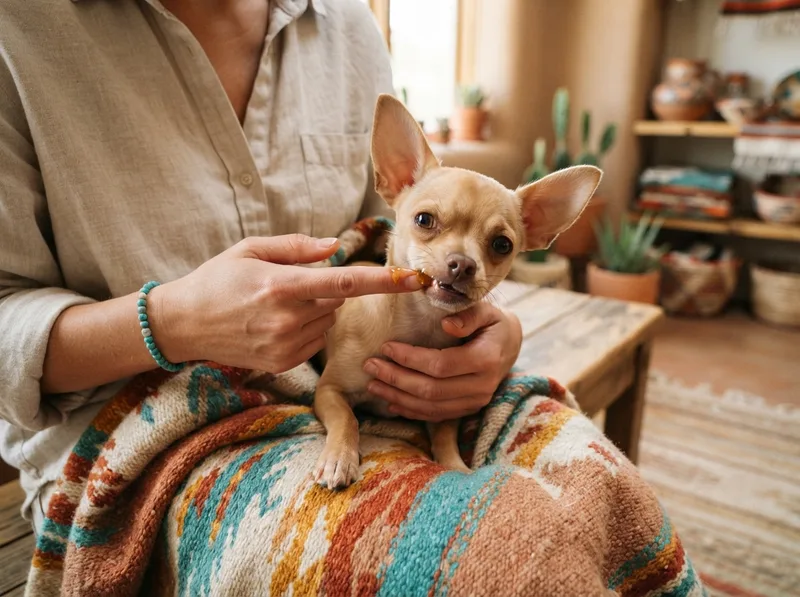
If you see the signs, do not wait. Rub a source of fast sugar directly onto the gums: honey, corn syrup, or a glucose gel made for this purpose. Even a collapsed puppy absorbs sugar through the gum tissue, so you do not need it to swallow. A dab on your finger, smoothed along the gums and cheeks, is enough. Never pour liquid into the mouth of an unresponsive puppy, because it can go into the lungs.
At the same time, warm the puppy. A blood sugar crash and a cold body feed each other, so wrap it gently in a warm towel or hold it against your body. Warmth plus sugar is the whole first-aid picture, and most puppies perk up within minutes as the sugar reaches the brain.
Perking up is not the finish line. Even a puppy that bounces back needs to see a vet the same day, because a crash can rebound and because it may signal an underlying problem that needs checking. Once the puppy is alert enough to swallow, offer a proper meal to rebuild reserves, then get to the vet. Keep honey or glucose gel in the house from day one, the way you keep a plaster in the cupboard.
If your puppy is wobbly, cold or collapsing
- Rub honey, corn syrup or glucose gel onto the gums immediately (no need to swallow)
- Never pour liquid into the mouth of an unresponsive puppy, it can enter the lungs
- Warm the puppy against your body or in a warm towel at the same time
- Once it can swallow, offer a full meal
- See a vet the same day even if it fully recovers, a crash can rebound
Prevention: small meals, warmth, and a calm start
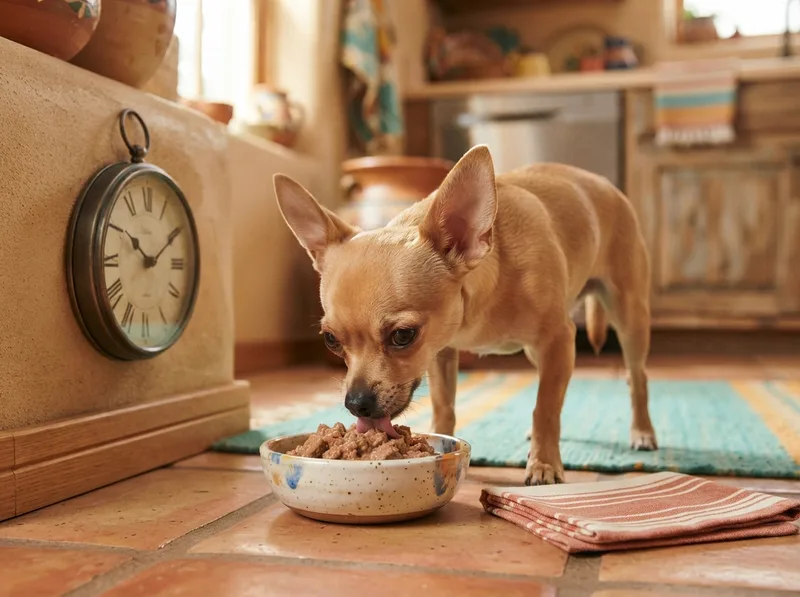
Prevention is almost entirely about frequent feeding. A young Chihuahua puppy should eat small meals several times a day rather than one or two big ones, so the fuel tank never runs dry. For very young toy puppies that often means a meal every few hours through the day, with your vet setting the exact interval for your puppy’s age and weight, gradually spacing out as the puppy grows and gains weight.
Free access to food between meals helps too in these early weeks, and a dab of a high-calorie nutritional gel can bridge a long gap or a big play session. Keep the puppy warm, because cold burns through energy fast, and keep the first days calm: exciting, exhausting afternoons of handling by every visitor are a classic trigger for a crash in a brand-new puppy.
This vulnerable window is temporary. As your Chihuahua matures toward its adult size over the coming months, its reserves grow and episodes of low blood sugar become a non-issue for a healthy dog. That is the reassuring flip side of the anti-teacup message: a normally grown Chihuahua is a robust little dog. If you ever want to talk through your puppy’s feeding schedule, WhatsApp us at +65 8220 6408. We send every puppy home with a plan and we are on the other end of the phone.
Warmth plus sugar is the whole first-aid picture. Keep honey in the house from day one.
Every few hrs
meals for young pups
Honey
fast first-aid sugar
Same day
vet visit after a crash
Grows out
as pup reaches adult size
Keep exploring
Frequently asked questions
What is hypoglycemia in a Chihuahua puppy?
It is low blood sugar. A very small, very young puppy carries little energy reserve, so a missed meal, a chill, stress or a burst of excitement can drain its fuel and cause a crash. It is normal toy-breed physiology that fades as the puppy grows to adult size.
What are the signs of low blood sugar in a puppy?
Early signs are sudden lethargy, wobbliness and a body that feels cold, with pale gums. It can progress to a glazed, faraway look, weakness, and in a severe crash to collapse or seizures. Act at the first quiet, wobbly, cool phase.
What do I do if my Chihuahua puppy has a crash?
Rub honey, corn syrup or glucose gel onto the gums right away, since it absorbs through the gum tissue and does not need to be swallowed. Warm the puppy at the same time. Once it can swallow, feed a meal, then see a vet the same day.
Should I still see a vet if my puppy recovers?
Yes, the same day. A crash can rebound after the first recovery, and it may point to an underlying problem worth checking. First aid stabilises the puppy; the vet visit makes sure it stays stable.
How do I prevent hypoglycemia?
Feed small meals frequently so the tank never runs dry, keep the puppy warm, and keep the first days calm rather than exhausting. Very young toy puppies often need a meal every few hours; confirm the exact interval with your vet for your puppy.
Do Chihuahuas grow out of hypoglycemia?
Healthy, normally grown ones do. As the puppy matures toward its adult size its reserves build and low blood sugar stops being a concern. That is the reassuring flip side of avoiding undersized dogs.
Why does this matter for the teacup issue?
A deliberately undersized or runt puppy sold as "teacup", "micro" or "pocket" carries even less reserve and stays fragile for longer. Smaller is not more precious here, it is more at risk. A correctly sized Chihuahua that grows normally leaves this window behind.
Meet your Chihuahua
Come say hello at Balestier
2 Balestier Road #01-701, Singapore 320002 · Weekdays 12pm–6pm · Weekends 10am–6pm. Or message us first: tell us about your home and routine, and we'll tell you honestly if a Chihuahua fits.
Still deciding?
Read the price guide first: every dollar explained, no surprises at the shop.
See the price guide