Buying & living
Your Chihuahua’s first week home, from night one to day seven
Set up the playpen, get the feeding schedule right, survive the first night and keep a fragile puppy safe and warm. Here is exactly what the first seven days look like.
Nelson and Kim, Curious Tails · AVS licence AS24J00046· Updated 24 July 2026
What matters most in a Chihuahua’s first week home?
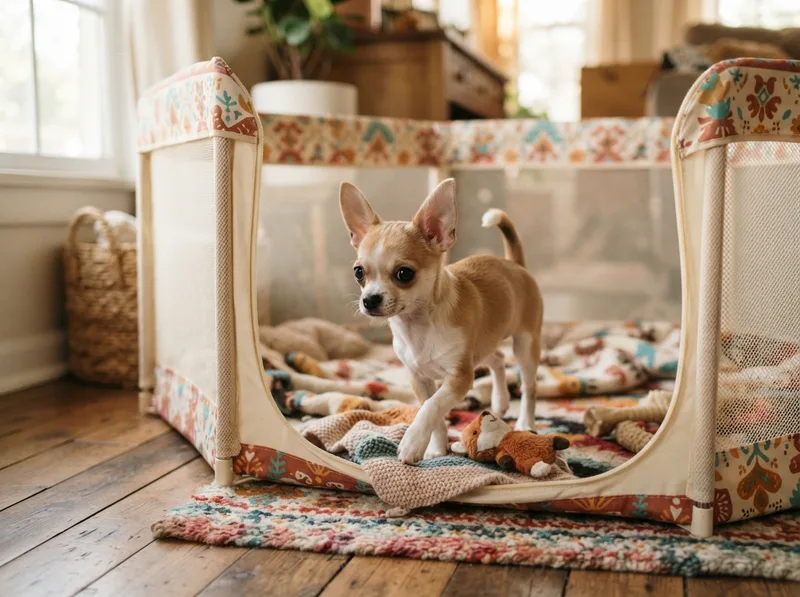
Start small: one playpen in a warm, draught-free corner. Feed small frequent meals (about four a day) to prevent hypoglycemia. Keep nights calm for settling, handle a fragile puppy gently, book the first vet visit, and keep it warm away from the aircon.
Before the puppy arrives: set the room, not the whole flat
The single biggest mistake with a new Chihuahua puppy is giving it the run of the house on day one. A Chihuahua is tiny, curious and easily lost behind a sofa, so the first week home works far better when the world starts small and grows outward. Set up one playpen in a warm, quiet corner of the living room, away from the front door and out of the direct blast of any aircon vent.
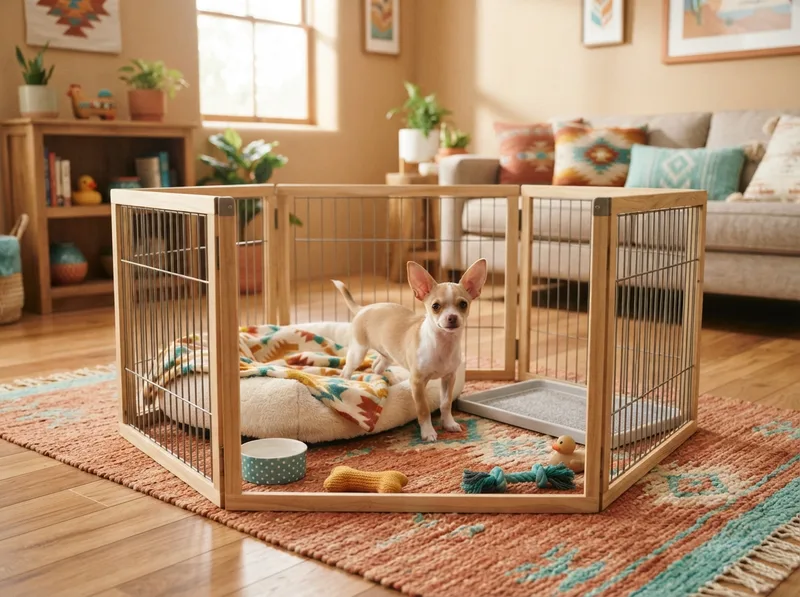
Inside that pen goes everything the puppy needs and nothing it does not: a draught-free bed with a soft blanket it can burrow into, a water bowl, a pee tray lined at one end, and a couple of safe chew toys. Keep the bed and the tray at opposite ends so the puppy learns early that one corner is for sleeping and another for toilet training. A pen roughly the size of a large playmat is plenty for the first week home.
Because the Chihuahua is HDB approved, this is genuinely a small-space dog, and an HDB living room corner is all the territory a settling puppy wants. Do not rush to show it the bedrooms, the kitchen and the balcony on the first afternoon. Let it master one safe zone first.
The first-week starter zone
- One playpen in a warm, quiet corner
- Draught-free bed with a burrow blanket
- Water bowl kept topped up
- Pee tray at the far end from the bed
- Two or three safe chew toys
- Away from the aircon draught and the front door
Feeding: small frequent meals are not optional
This is the part of the first week home that owners of bigger breeds never have to think about, and it matters most. A Chihuahua puppy has almost no fat reserve, so a long gap between meals can drop its blood sugar dangerously low. The defence is a simple feeding schedule built on small frequent meals: four measured feeds a day for a young puppy, spaced across waking hours, never one big bowl morning and night.
Watch for the early signs of hypoglycemia: wobbliness, glazed eyes, unusual sleepiness or shivering that is not just cold. Knowing what to do in that moment is important enough that we keep a separate first-aid guide for it, and every new owner should read it before the puppy comes home. In the first week especially, do not let a playful puppy skip a meal because it was too busy exploring.
Feed the same food the puppy was raised on for at least the first week, then transition slowly if you want to change. A sudden diet switch on top of the stress of a new home is how you get an upset stomach, and an upset stomach is how you get a puppy that will not eat, which loops straight back to the blood-sugar risk.
4 meals
per day, young puppy
Same food
for the first week
Never
a long gap between feeds
14–18 yrs
the commitment ahead
Night one, and the nights that follow
The first night is the hard one. Your Chihuahua puppy has just left its litter, and it will likely cry. This is normal and it passes, usually within a few nights, and the way you handle it sets the pattern. Keep the pen where you can hear the puppy but resist lifting it into your bed at 2am on night one, because a Chihuahua learns fast and one rescue teaches it that crying summons company.
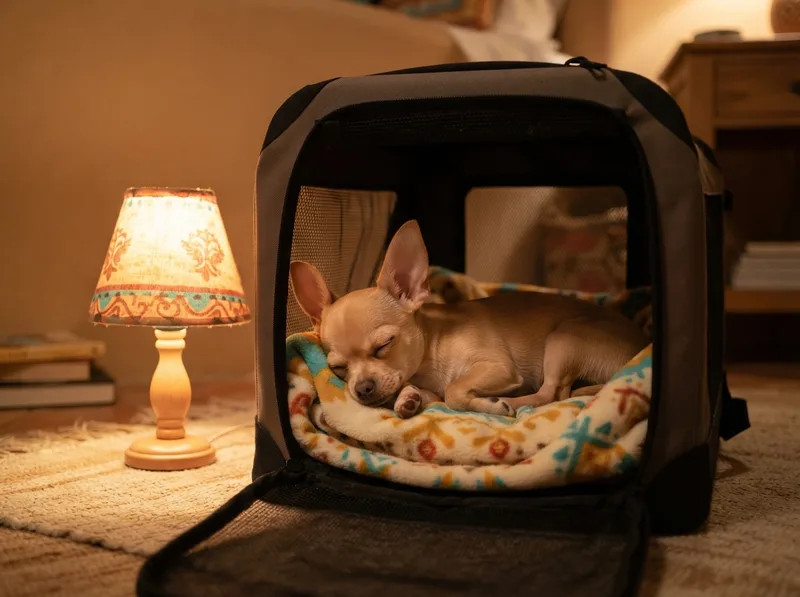
A warm, draught-free bed helps enormously. A soft toy to snuggle, a blanket that already smells of the pen, and a room that is not freezing under the aircon all make settling easier. Some owners place the pen beside the bed for the first few nights and slowly move it to its permanent spot as confidence grows. There is no medal for rushing this.
Take the puppy to its pee tray last thing before lights out and first thing on waking. A young puppy cannot hold on all night, so expect a tray visit or an accident, and clean it without fuss. Calm, warm, predictable nights are what turn a frightened new arrival into a settled dog by the end of the first week home.
The first week is not about training a perfect dog. It is about proving to a tiny animal that this new place is safe, warm and worth trusting.
Gentle handling: this is a fragile dog, not a toy
A Chihuahua is one of the most fragile dogs you can own, and the first week is when the whole household learns the rules. A jump from the sofa, a missed step on the stairs or a careless squeeze can break a leg on a dog this light. Gentle handling means supporting the chest and hindquarters together, never scooping by the front legs, and never leaving the puppy on a raised surface unattended.
This is also why a Chihuahua is a poor match for a home with toddlers who cannot yet understand how breakable it is. If there are young children, the first week is the time to set firm ground rules: the puppy is picked up only by an adult, and floor time is supervised. Teach children to sit and let the puppy come to them.
Handle the puppy calmly and often in short sessions so it learns that human hands are gentle and safe. This early socialising to touch, to being held, to having its paws and mouth looked at, pays off enormously later when you need to brush its teeth or check its patella. A puppy that trusts handling in week one is a far easier adult dog.
Keep a fragile puppy safe from day one
- Support chest and hindquarters together when lifting
- Never let the puppy jump down from sofas or beds
- No toddlers picking it up unsupervised
- Block gaps behind furniture where a tiny puppy can vanish
- Watch every doorway; a Chihuahua puppy is easy to step on
The first vet visit and keeping warm
Within the first few days, book the first vet visit for a wellness check. Your puppy comes to you already microchipped and part way through its vaccinations (weeks 6 and 8, with week 12 and an optional week 16 to follow), and the vet will confirm the schedule and answer your specific questions. Bring the vaccination booklet we hand over. As an AVS licensed shop, we file your dog licence at purchase, so that box is already ticked.
Singapore’s climate issue for this breed is not heat, it is cold. A Chihuahua feels the aircon keenly, so keep the puppy warm: a blanket in the pen, a small sweater on cold evenings, and the bed placed away from the vent. If you are unsure about anything in the first week home, from a skipped meal to a soft stool, our care advice line is a WhatsApp message away at +65 8220 6408, and we would always rather you asked early.
By the end of week one, most puppies are eating on schedule, using the tray most of the time, sleeping through more of the night and starting to show the bold, devoted personality this breed is loved for. That is the goal: not perfection, but a settled, warm, well-fed Chihuahua that has decided your home is home.
Keep exploring
Frequently asked questions
What do I need ready before my Chihuahua puppy comes home?
A playpen in a warm quiet corner, a draught-free bed with a burrow blanket, a water bowl, a pee tray at the far end, and a few safe chew toys. Keep it away from the aircon draught and the front door.
How often should I feed a Chihuahua puppy in the first week?
Small frequent meals, about four measured feeds a day for a young puppy across waking hours. Never leave a long gap, because a Chihuahua puppy has little fat reserve and can drop its blood sugar low.
What are the signs of hypoglycemia in a new puppy?
Wobbliness, glazed eyes, unusual sleepiness or shivering that is not just cold. It is important enough that every new owner should read our puppy hypoglycemia first-aid guide before the puppy arrives.
How do I stop my Chihuahua puppy crying at night?
Expect crying on night one; it usually passes within a few nights. A warm draught-free bed, a blanket that smells of home and keeping the pen near you help. Avoid rewarding the crying by lifting it into bed on the first night.
When should the first vet visit happen?
Within the first few days, for a wellness check. Your puppy arrives microchipped and part way through its vaccinations, and the vet confirms the schedule. Bring the vaccination booklet we hand over.
How do I keep a Chihuahua warm in an air-conditioned flat?
Keep the bed away from the aircon vent, add a blanket in the pen and a small sweater on cold evenings. In Singapore the cold, not the heat, is this breed’s climate issue.
Is a Chihuahua too fragile for young children?
A Chihuahua is genuinely fragile and a poor match for homes with toddlers who cannot understand how breakable it is. With older, gentle children, set firm rules: an adult does the lifting, and floor time is supervised.
Meet your Chihuahua
Come say hello at Balestier
2 Balestier Road #01-701, Singapore 320002 · Weekdays 12pm–6pm · Weekends 10am–6pm. Or message us first: tell us about your home and routine, and we'll tell you honestly if a Chihuahua fits.
Still deciding?
Read the price guide first: every dollar explained, no surprises at the shop.
See the price guide