Health hub
Chihuahua health, the honest toy-breed picture
A long-lived, tough little dog with a short, specific list to respect: knees, blood sugar, skull, windpipe, heart, weight, and the Singapore twist of cold over heat.
Nelson and Kim, Curious Tails · AVS licence AS24J00046· Updated 24 July 2026
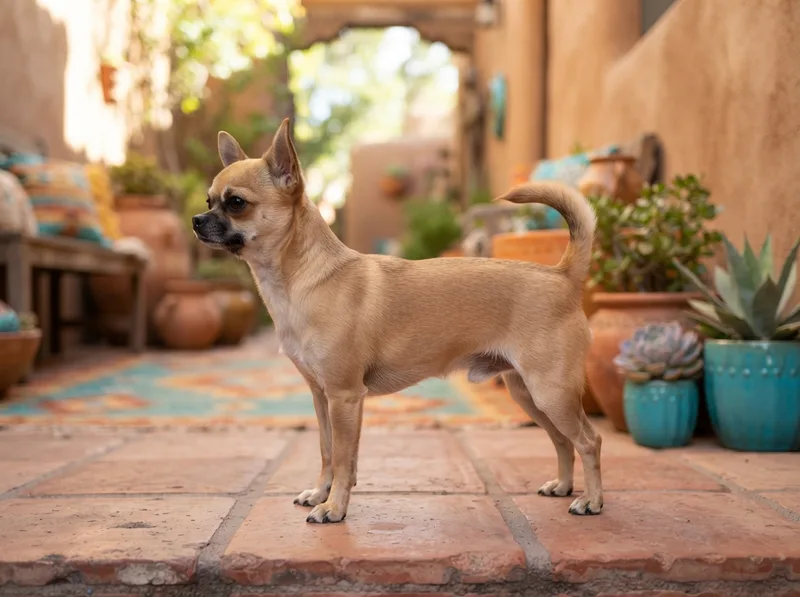
What health problems do Chihuahuas have?
Chihuahuas are long-lived but carry a toy-breed cluster: patellar luxation, puppy hypoglycemia, a molera with a small hydrocephalus risk, tracheal collapse, and mitral valve heart disease with age. Obesity multiplies all of them, and dental disease is the biggest long-term issue. Uniquely in Singapore, the climate risk is cold aircon, not heat. Keep the dog lean, on a harness, with brushed teeth and a yearly vet check.
A healthy breed with a short list to respect
Here is the reassuring headline first: the Chihuahua is one of the longest-lived dogs on earth, commonly reaching its mid-to-high teens, and most live full, robust lives. This is not a delicate breed in the sense of being sickly. It is a tough little dog with a short, specific list of health problems that come with being a toy breed, and every one of them is easier to manage if you know it going in.
Where we cannot source a number, we say so plainly rather than throw an invented statistic at you. What follows is the honest cluster: knees, blood sugar, skull, windpipe, heart, and the one that multiplies them all, weight. Plus the surprise nobody warns Singapore owners about: your Chihuahua's problem here is the cold, not the heat.
Every puppy we place leaves with a vet health check and honest notes, and we are glad to talk through what health screening the parents had. Buying from an AVS licensed shop that tells you this upfront is itself a health decision.
The toy-breed cluster, at a glance
- Patellar luxation (slipping kneecaps)
- Puppy hypoglycemia (blood-sugar crashes)
- Molera + small hydrocephalus risk
- Tracheal collapse (windpipe)
- Heart disease with age (mitral valve)
- Obesity, the multiplier of all the above
- Dental disease (its own guide)
Knees, blood sugar and the puppy months
Patellar luxation, a kneecap that slips out of its groove, is the breed's most common orthopedic issue. One veterinary study of Chihuahuas found it in a meaningful share of dogs and noted a strong inherited component. We do not publish a prevalence percentage we cannot stand behind, so treat the figure as "common enough to check for" and ask your vet to feel the knees at every visit. Signs are a skipping step or a briefly held-up back leg. Many mild cases need only lean weight and monitoring; severe ones may need surgery. A responsible patella check is part of a good vet exam.
Hypoglycemia is the single most important thing a new owner must understand. A tiny puppy's blood sugar can crash quickly, causing wobbliness, glazed eyes, cold, and in severe cases seizures. The prevention is frequent small meals, and the first aid is rubbing honey or glucose gel on the gums and getting to a vet. It is largely a young-puppy issue that resolves as the dog grows to a normal adult size, which is one more reason the "teacup" push is dangerous: it keeps a dog in the risky size bracket.
Hypoglycemia first aid (young puppies)
- Signs: wobbliness, lethargy, cold, glazed eyes, in bad cases seizures
- Rub honey or glucose gel on the gums immediately
- Keep the puppy warm and get to a vet the same day
- Prevent it: small meals every few hours, do not let a tiny puppy go hungry
The skull, the windpipe and the heart
Many Chihuahuas have a molera, a soft spot where the skull plates have not fully closed, a bit like a baby's fontanelle. On its own it is usually harmless, and plenty of normal Chihuahuas keep a small one for life. A large molera can, in a minority of cases, be associated with hydrocephalus (fluid on the brain), so it is worth a vet's eye, but a molera by itself is not a diagnosis and not a cause for panic. Ask your own vet to assess the individual dog.
Tracheal collapse is a small-breed weakness of the windpipe that can cause a honking cough. It has a good prognosis when managed early, and the single best preventive step is simple: walk your Chihuahua on a harness, never a neck collar, so a lead jerk never lands on the throat. On the heart, older Chihuahuas can develop mitral valve disease, which is why an annual vet check that includes listening to the heart matters more as the dog ages.
Weight: the multiplier that hides in plain sight
If you fix only one thing, fix this. Obesity is the great multiplier of every problem above. Extra weight stresses those slipping knees, loads the fragile windpipe, and burdens an ageing heart. On a two-to-three kilogram dog, even a couple of hundred extra grams is proportionally enormous, and it is desperately easy to over-feed a small dog that looks up at you convincingly.
A lean weight is the cheapest, most powerful health insurance a Chihuahua has. You should be able to feel the ribs easily under a light covering, and see a waist from above. Measure food, count treats as part of the daily total, and resist the table scraps. A lean Chihuahua moves better, breathes better and, on the evidence, lives longer.
That long life is the payoff for all this care. A well-kept Chihuahua's lifespan reaching into the high teens is not luck, it is lean weight, brushed teeth, a harness, and a vet check every year, compounded over a decade and a half.
1.8–2.7 kg
healthy adult weight
Harness
never a neck collar
Yearly
vet check (heart + patella)
Mid–high teens
typical lifespan
The Singapore surprise: cold, not heat
Every other small breed guide for Singapore is about managing heat. The Chihuahua flips it. With its low body mass and thin coat, especially the smooth coat, the Chihuahua chills easily, and in this country the hazard is the aircon, not the sun. A Chihuahua that seeks out laps, burrows under blankets and shivers in a cold room is not being dramatic, it is genuinely cold.
Manage it the way you would manage heat for another breed: warm bedding away from the direct aircon draught, a soft jumper indoors on cold days, and somewhere cosy to retreat. It is real care, not pampering, and it is the one climate adjustment this breed actually needs here. It also happens to make the Chihuahua a superb air-conditioned-apartment dog, provided you give it a warm corner.
If you want the full first-week health setup, feeding schedule, harness fitting, warm bedding, dental routine, WhatsApp us at +65 8220 6408 and we will walk you through it for your specific puppy.
A Chihuahua is not a fragile dog. It is a tough little dog with a short list of things to respect, and lean weight is at the top of it.
Keep exploring
Frequently asked questions
What health problems do Chihuahuas have?
The main toy-breed cluster: patellar luxation (slipping kneecaps), puppy hypoglycemia, a molera with a small hydrocephalus risk, tracheal collapse, and mitral valve heart disease with age. Obesity multiplies all of them, and dental disease is the biggest long-term issue.
How common is patellar luxation in Chihuahuas?
It is the breed's most common orthopedic condition, with a strong inherited component reported in veterinary studies. Mild cases often need only lean weight and monitoring; severe ones may need surgery. Ask about a patella check.
What do I do if my puppy has a hypoglycemia episode?
Rub honey or glucose gel on the gums straight away, keep the puppy warm, and get to a vet the same day. Prevent it with frequent small meals; it is mostly a young-puppy issue that resolves as the dog reaches normal size.
Is a molera on my Chihuahua dangerous?
Usually not. A molera is a soft spot on the skull that many normal Chihuahuas keep for life. A large one can occasionally be linked to hydrocephalus, so have a vet look, but on its own it is not a diagnosis.
Why should a Chihuahua wear a harness?
Because the breed is prone to tracheal collapse. A harness spreads any lead pressure across the chest instead of the throat, protecting the windpipe. Never walk a Chihuahua on a neck collar.
Do Chihuahuas feel the cold in Singapore?
Yes, and it is the real climate issue for the breed here. Their low body mass and thin coat mean they chill in strong air-conditioning. Warm bedding away from the draught and a jumper on cold days are genuine care.
How do I keep my Chihuahua healthy?
Keep it lean, brush its teeth, walk it on a harness, keep it warm indoors, and see a vet yearly for a heart and patella check. Those habits, compounded over the breed's long life, are what a healthy Chihuahua is made of.
Meet your Chihuahua
Come say hello at Balestier
2 Balestier Road #01-701, Singapore 320002 · Weekdays 12pm–6pm · Weekends 10am–6pm. Or message us first: tell us about your home and routine, and we'll tell you honestly if a Chihuahua fits.
Still deciding?
Read the price guide first: every dollar explained, no surprises at the shop.
See the price guide