Breed guide
What Is a Chihuahua? The Complete Breed Guide
The world’s smallest dog breed, with one of the biggest personalities and longest lifespans. Here is the honest, complete guide to the Chihuahua, and what owning one means in Singapore.
Nelson and Kim, Curious Tails · AVS licence AS24J00046· Updated 24 July 2026
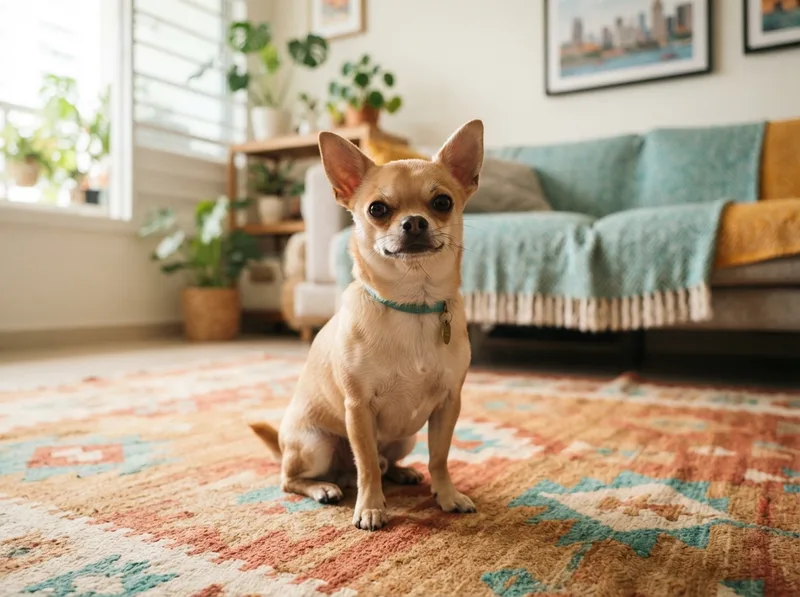
What is a Chihuahua?
A Chihuahua is a Mexican toy breed and the smallest dog breed in the world, known for its compact body, rounded apple-shaped head and large upright ears. Chihuahuas usually weigh 1.5 to 3 kg, come in smooth or long coats, live a famously long 14 to 18 years, and are affectionate, bold companions. In Singapore they are HDB approved, the smallest breed on the list.
A Chihuahua, defined
The Chihuahua is a toy breed from Mexico and the smallest dog breed recognised in the world. It is a companion dog first and foremost, bred not to work but to be close to its person, which is exactly how it behaves. Named after the Mexican state of Chihuahua, it is defined by a compact body, a rounded skull and large, erect ears.
Two things surprise first-time buyers. First, this is one breed with real variety inside it: it comes in a smooth coat and a long coat, and in two head shapes, the standard apple head and the longer-muzzled deer head. Second, for such a small dog it is remarkably long-lived and remarkably bold, which is why owners so often say it thinks it is a much bigger dog.
Everything below is the honest version of the breed: what it is, how big it gets, what it needs, and, because we place these dogs in Singapore, what owning one actually means in an HDB flat. Where a health point needs your own vet's confirmation for your individual dog, we say so rather than dress a guess up as fact.
The Chihuahua at a glance
- Origin: Mexico, named after the state
- Group: toy breed, the world’s smallest
- Adult weight: usually 1.5 to 3 kg
- Height: roughly 15 to 23 cm at the shoulder
- Lifespan: commonly cited 14 to 18 years
- Coats: smooth (short) and long
- Head types: apple head (standard) and deer head
- Singapore: HDB approved · our puppies $4,288–$4,888 all-in
How big do Chihuahuas get, really?
Not very, and that is the point. A healthy adult usually weighs 1.5 to 3 kg, and the breed standard caps the ideal at about 2.7 kg, or 6 lb. Height runs roughly 15 to 23 cm at the shoulder. There is no official "toy" versus "standard" split inside the breed; a Chihuahua is simply a small dog, full stop.
Which brings us to the word you will see everywhere and should distrust: teacup. "Teacup", "micro" and "pocket" are not a size class and appear in no breed standard. They are marketing labels for an undersized dog, often the runt, sold at a premium, and that undersizing correlates with hypoglycemia, fragile bones, crowded teeth and a shorter life. Smaller is not rarer or better here; it is riskier, which is why we refuse the label and explain it in full in the teacup truth.
If a seller is pricing a Chihuahua on how tiny it will stay, treat that as a warning, not a feature. A correctly built Chihuahua is small enough already. Our size and weight guide has the numbers in detail.
1.5–3 kg
typical adult weight
~2.7 kg
breed-standard cap
15–23 cm
shoulder height
$4,288
SG all-in, published
Chihuahua temperament: a big dog in a small body
The temperament is the breed's headline: a bold, alert, fiercely loyal dog that usually bonds hardest to one person. For its size it is astonishingly confident, quick to notice a knock at the door and quicker to announce it. Lively, devoted and a little theatrical is the honest summary.
That boldness cuts both ways. Under-socialised, a Chihuahua becomes the yappy, snappy stereotype nobody wants living below them. Socialise it early and often, and you get a portable, devoted companion that travels well and settles quickly. The difference is almost entirely down to the work you put in during the first few months, which we walk through in the socialisation guide and the fuller temperament guide.
They are alert enough to bark and stubborn enough to need patient, reward-based training; this is not a dog you can ignore into good behaviour. For the right owner, that intensity is the whole appeal.
One breed, two coats and two head shapes
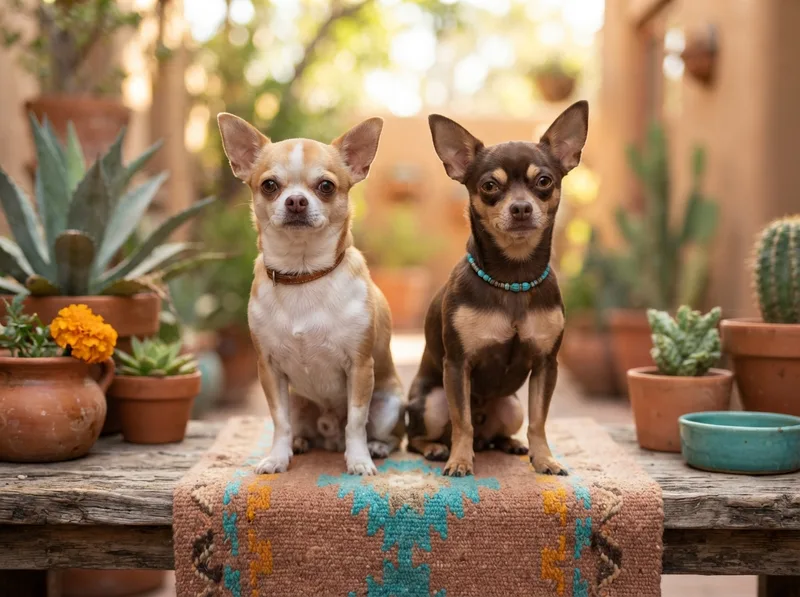
A Chihuahua comes in two coats and two head shapes, and none of them is a different or rarer breed. The smooth coat is short and glossy and needs almost no grooming; the long coat carries soft feathering on the ears, legs and tail and wants a brush a couple of times a week. Same breed, same price with us, just two looks.
The two head shapes cause more confusion. The apple head, with its domed skull and short muzzle, is the breed standard, and apple-head puppies are often born with a molera, a soft spot on the skull. The deer head, with a longer muzzle and a flatter skull, is non-standard but typically healthy, and it is the one people mistake for a Miniature Pinscher.
We place both coats and both head types, and we never treat a deer head as a discount dog or a colour as a luxury one. For the detail, see smooth vs long coat and apple head vs deer head.
| Variety | What it is | What to know |
|---|---|---|
| Smooth coat | Short, close coat | Minimal grooming; still feels the cold |
| Long coat | Soft feathered coat | A brush 2 to 3 times a week; not a premium tier |
| Apple head | Domed skull, short muzzle | The breed standard; often has a molera |
| Deer head | Longer muzzle, flatter skull | Non-standard but usually healthy; confused with a Min Pin |
Chihuahua health and the famously long life
The good news is the lifespan: the Chihuahua is one of the longest-lived dogs, commonly cited at 14 to 18 years and not rarely reaching 20 with good care. That long life is the breed's great gift and its real responsibility, because the habits you build now run for well over a decade.
The single biggest long-term health reality is dental care. A full set of teeth crowded into a tiny jaw makes gum disease the breed's number-one issue, so home brushing plus vet dental checks are non-negotiable, not optional pampering. Beyond teeth, toy breeds are watched for a luxating patella (a slipping kneecap), puppy hypoglycemia (low blood sugar), the molera soft spot, and windpipe sensitivity that is why we walk them on a harness rather than a collar. Prevalence varies between dogs, and your vet's health check on the individual animal is what counts.
One Singapore twist runs against instinct: the Chihuahua feels the cold, not the heat. In an air-conditioned flat the hazard is the aircon, so warm bedding and a jumper indoors are genuine care. The health guide and lifespan guide go deeper.
Dental care is the Chihuahua deal-breaker
The tiny jaw crowds a full set of teeth, so brushing at home and periodic vet cleanings are part of owning the breed, not an extra. Skip it and you pay in extractions later. See the dental care guide for the routine that works.
Chihuahua puppies: what the early months look like
A Chihuahua puppy is tiny, and that shapes the first months. The main early risk is hypoglycemia: a very small puppy can run low on blood sugar if meals are spaced too far apart, so frequent small feeds and knowing the first-aid signs matter. Ours go home at around week 9, after vaccinations at weeks 6 and 8, deworming at every visit and a vet health check.
People often ask how to tell if a puppy is a Chihuahua. Look for the rounded, apple-shaped head, the outsized erect ears, the small fine-boned frame and sometimes a molera. What you cannot reliably do is predict an exact adult size, and anyone promising a guaranteed "teacup" adult is selling the myth, not the dog.
Early socialisation is the other half of the job: calm exposure to people, sounds and handling now is what prevents the barky adult later. Our first week home guide and hypoglycemia first-aid guide cover the anxious early days, and current litters sit on the available puppies page.
The Chihuahua in Singapore: HDB, price and the aircon rule
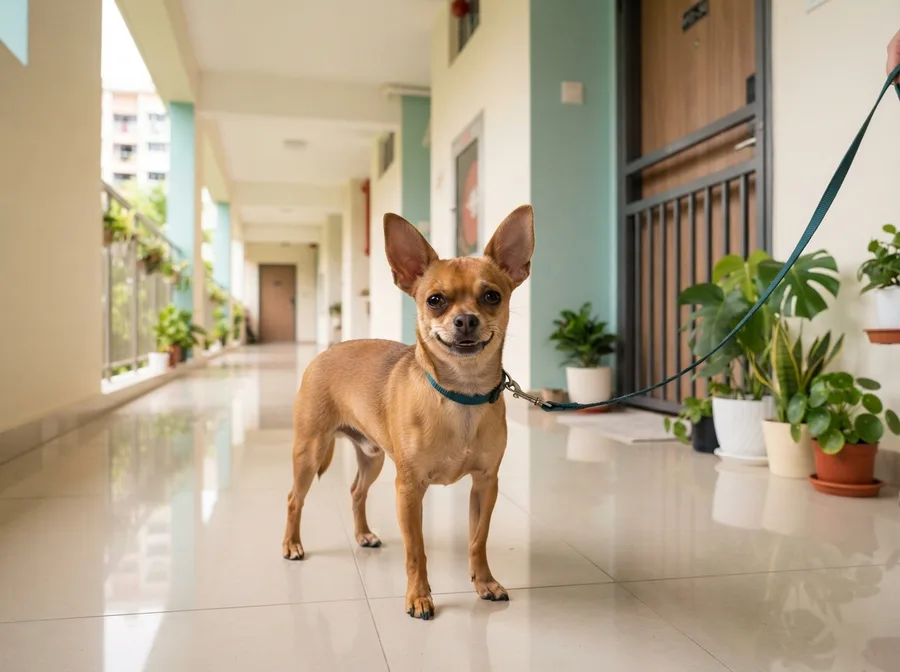
Here is what the global breed guides leave out, and what matters most if you live here. The Chihuahua is on the HDB approved list, and it is the smallest approved breed, which makes it one of the most sensible flat dogs in Singapore. HDB allows one approved dog per flat, and every dog must be AVS licensed; we handle that licence at purchase.
On price, we publish ours rather than make you ask: a Chihuahua from us is $4,288–$4,888 all-in, one band across both coats, both head types and every colour, with no rare-colour premium and never a "teacup" upcharge. The price guide itemises exactly what that covers, and the HDB guide covers the housing rules and the one-dog limit.
And the climate point bears repeating because it is the opposite of what people expect: in Singapore the Chihuahua's problem is the cold of constant aircon, not the tropical heat. Warm bedding, a jumper indoors and a draught-free corner are the real care here, as the aircon guide explains.
Is a Chihuahua right for you? The honest downsides
No honest breed guide ends on a sales pitch, so here is the plain list of reasons a Chihuahua might be the wrong dog for you. It is fragile: the wrong dog for a home with a toddler, though gentle older children who understand "careful" are fine. It bonds intensely, usually to one person, and can be possessive of them.
It is vocal and, if under-socialised, genuinely yappy, which matters when you share walls with neighbours. Its dental care is a fifteen-year commitment, not a phase. And it feels the cold. None of this is a reason not to own one; all of it is a reason to own one with your eyes open.
If that honest brief still sounds like your dog, a Chihuahua will give you a devoted, portable, long-lived companion that fits Singapore living better than almost anything else on four legs. Still weighing it up? Compare it with the other tiny breeds on our comparison hub.
A Chihuahua is a big personality in a small, long-lived body. Buy the personality with your eyes open, and never buy the "teacup" myth.
Explore the full Chihuahua guide
Frequently asked questions
What is a Chihuahua?
A Chihuahua is a Mexican toy breed and the smallest recognised dog breed in the world, kept as a companion dog. It has a compact body, a rounded apple-shaped head and large erect ears, comes in smooth or long coats, and is bold, alert and famously long-lived.
What country are Chihuahuas from?
Mexico. The breed is named after the Mexican state of Chihuahua, where it was first documented in the 1800s. It is generally considered a descendant of a small companion dog kept by earlier civilisations in the region.
How big does a Chihuahua get?
A healthy adult Chihuahua usually weighs 1.5 to 3 kg and stands roughly 15 to 23 cm at the shoulder, with the breed standard capping the ideal at about 2.7 kg (6 lb). There is no legitimate "teacup" size below this; that is a marketing label, not a class.
How long do Chihuahuas live?
A long time for a dog: commonly cited at 14 to 18 years, and some reach 20 with good care. That longevity is the breed’s biggest benefit and its real commitment, since dental care and lean weight now pay off for well over a decade.
Is a Chihuahua a good dog to have?
For the right owner, yes: it is devoted, portable, low-exercise and suits small homes, including HDB flats. It is less suited to homes with toddlers or to owners who cannot socialise it early, since an unsocialised Chihuahua becomes yappy and wary.
What is so special about Chihuahuas?
The combination of the smallest body of any breed with one of the biggest personalities and one of the longest lifespans. A Chihuahua is a genuine lap-sized companion that bonds intensely to its person and can share fifteen years or more with you.
What is the downside of a Chihuahua?
It is fragile, so not a toddler’s dog; it can be yappy and one-person-focused if under-socialised; and its dental care is a lifelong, non-negotiable job because the tiny jaw crowds a full set of teeth. In Singapore it also feels the cold of constant aircon.
Is a Chihuahua high maintenance?
Not for grooming or feeding, which are both light. It is higher maintenance in two specific ways: dental care must be lifelong, and early socialisation is essential to avoid the barky, snappy stereotype. Get those right and daily care is easy.
Can a Chihuahua be left alone?
For a normal working day only if it is gradually trained to it, given a warm, safe space and left with enrichment. Chihuahuas bond hard and can develop separation anxiety, so most do best in homes where someone is around fairly often.
How can you tell if a puppy is a Chihuahua?
Look for the rounded, apple-shaped head, outsized erect ears, a small fine-boned frame and sometimes a molera (a soft spot on the skull). You cannot reliably predict exact adult size, and any promise of a guaranteed "teacup" adult is a myth, not a measurement.
What is the difference between an apple head and a deer head Chihuahua?
The apple head has a domed skull and short muzzle and is the breed standard; it often has a molera. The deer head has a longer muzzle and flatter skull, is non-standard but usually healthy, and is the type people confuse with a Miniature Pinscher.
What is the difference between a smooth coat and a long coat Chihuahua?
They are the same breed with two coat types. The smooth coat is short and needs almost no grooming; the long coat has soft feathering and needs brushing two to three times a week. Neither is rarer, and with us neither costs more.
Is a teacup Chihuahua a real breed or size?
No. "Teacup", "micro" and "pocket" are marketing labels, not a size class or breed standard. They describe an undersized dog, often the runt, and correlate with hypoglycemia, fragile bones and dental problems. We refuse the label and place correctly sized dogs only.
Are Chihuahuas good with children?
With gentle, older children who understand how to handle a small, fragile dog, yes. They are not suited to homes with toddlers, because a Chihuahua is easily injured and may snap defensively if handled roughly. Supervision and calm handling are essential.
Do Chihuahuas bark a lot?
They can. Chihuahuas are alert and vocal by nature, and an under-socialised one becomes genuinely yappy, which matters in an HDB flat. Early socialisation and teaching a reliable "quiet" cue keep it manageable, as our barking guide explains.
Are Chihuahuas allowed in HDB flats in Singapore?
Yes. The Chihuahua is on the HDB approved list and is in fact the smallest approved breed. HDB allows one approved dog per flat, and every dog must be licensed with AVS, which we handle at the point of purchase.
How much is a Chihuahua puppy in Singapore?
Our Chihuahua puppies are $4,288–$4,888 all-in from an AVS licensed shop, covering the vet health check, vaccinations, microchip, a starter kit, delivery, a first training lesson and the dog licence. One band for every coat, head type and colour, with no teacup premium.
Do Chihuahuas feel the cold in air-conditioned Singapore?
Yes, and this is the breed’s real climate issue here. Chihuahuas are cold-sensitive, not heat-sensitive, so a constantly air-conditioned flat can chill them. Warm bedding, a jumper indoors and a draught-free spot are genuine care, not pampering.
Do Chihuahuas need a lot of grooming?
A smooth-coat Chihuahua needs very little: an occasional wipe-down and nail trims. A long-coat needs brushing two to three times a week to prevent tangles. Both need the same lifelong dental care, which is the breed’s real upkeep rather than the coat.
Is a Chihuahua a good first dog?
It can be, for a first-time owner who wants a small indoor companion and is ready to commit to early socialisation and lifelong dental care. It is a poorer first choice for a busy household with very young children or long daily absences.
Meet your Chihuahua
Come say hello at Balestier
2 Balestier Road #01-701, Singapore 320002 · Weekdays 12pm–6pm · Weekends 10am–6pm. Or message us first: tell us about your home and routine, and we'll tell you honestly if a Chihuahua fits.
Ready to meet one?
See the Chihuahua puppies available now, with coats, colours and how to reserve.
See available puppies