Temperament guide
Chihuahua temperament: a big-dog heart in a tiny body
Bold, loyal and opinionated, not the trembling accessory of the stereotype. The one-person bond, the truth about the angry Chihuahua, and the honest word on kids.
Nelson and Kim, Curious Tails · AVS licence AS24J00046· Updated 24 July 2026
What is a Chihuahua's temperament like?
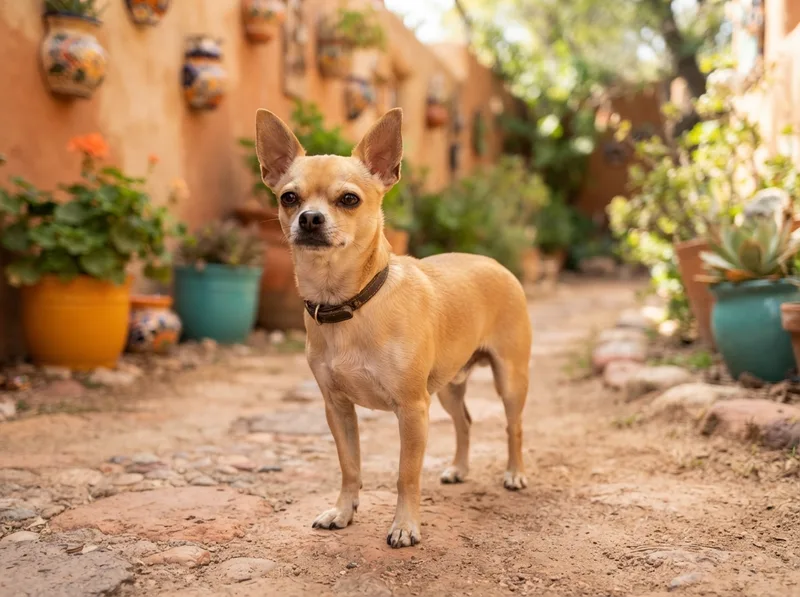
A Chihuahua is bold, loyal and opinionated, a genuine big-dog personality in a tiny body, with an intense one-person bond. The "angry" or "aggressive" Chihuahua is almost always a fearful, un-socialised one, and it is both preventable and fixable. They are alert barkers that need a taught "quiet", devoted companions for singles and seniors, and, because they are fragile, not the right dog for a home with a boisterous toddler.
A big dog in a tiny body, and that is the point
The Chihuahua's temperament is the most underrated thing about the breed. Forget the trembling-handbag-accessory image: a well-raised Chihuahua is a bold, confident, deeply loyal little dog with the self-belief of something ten times its size. It will guard its doorway, boss the household cat, and greet the world chest-first. This is a genuine personality, not a decoration.
That "big dog in a tiny body" quality is exactly why people fall for the breed, and it is why the Chihuahua is nothing like the gentle, biddable lapdog stereotype some other toy breeds fit. It is more opinionated, more devoted, and more of a character. Understand it and you have one of the most rewarding companions in dogdom. Misread it and you get the yappy nightmare the memes are made of.
The single biggest predictor of which one you end up with is not luck or line. It is socialisation and training in the first months. That is the honest core of this page.
The honest Chihuahua profile
- Bold, confident, loyal, opinionated
- Bonds intensely, often to one person
- Alert barker; needs a taught "quiet"
- Fragile: not a toddler dog
- Highly trainable, food-motivated
- Long-lived: a 15+ year relationship
The "angry Chihuahua" decoded
Search the breed and you will find "angry Chihuahua", "aggressive Chihuahua", "crazy Chihuahua" everywhere. So let us be straight: aggression is not baked into this breed. What looks like aggression is almost always fear in a dog that was never taught the world is safe, defending itself the only way a two-kilogram animal can, loudly and pre-emptively.
Two things create the snappy Chihuahua. First, missed socialisation: a puppy that never calmly met strangers, other dogs, and everyday noise grows up treating all of it as a threat. Second, being carried and coddled through every scary moment, which teaches the dog that the world is dangerous and that a human will always intervene. A reactive, yappy Chihuahua is usually a made problem, and, crucially, a largely fixable one.
You can absolutely turn a nervous Chihuahua around with patient counter-conditioning, but it is far easier to prevent. Raise a Chihuahua like a real dog, not a fragile ornament, and calm confidence is the default it settles into.
The socialise-or-yappy window
- Weeks 8–16 are the golden socialisation window
- Calm exposure to people, dogs, sounds, surfaces, handling
- Let the dog walk and meet the world on its own four feet
- Reward calm; never soothe or reward the barking/snapping
- Teach a "quiet" cue early, before barking becomes a habit
The one-person bond: feature or mismatch
The defining Chihuahua trait is the intensity of its attachment. This breed forms a fierce one-person bond, choosing a human and following them from room to room, sleeping against them, watching the door for them. For a single person, a couple, or a senior living alone, this is close to the perfect dog: constant, devoted company that asks mainly to be near you.
But that same intensity is a genuine mismatch for some homes. A Chihuahua bonded hard to one person can become jealous or protective, sometimes tipping into resource guarding its human from other people or pets. In a busy, multi-focus household where the dog is passed around and often left, that devotion curdles into anxiety and noise. The breed does best where someone is around a lot and where its person is genuinely its person.
Think honestly about your household's shape before you choose this breed. It is not a low-attachment dog you can keep at arm's length; it wants in, all the way in, for the fifteen-plus years it will likely live.
A Chihuahua does not want to be your pet. It wants to be your shadow. For the right owner, that is the whole appeal.
Chihuahuas and children: the honest answer
This is where we will not soften it, because getting it wrong hurts a dog or a child. A Chihuahua is physically fragile: light bones, a small body, and a self-belief that writes cheques its size cannot cash. Rough handling, a drop from a sofa, or being squeezed by an excited toddler can genuinely injure one, and a frightened, cornered Chihuahua may snap in self-defence.
So the honest guidance: a Chihuahua is not a toddler's dog. In a home with very young children who cannot yet be gentle and calm on command, we usually steer buyers toward a sturdier breed or a later time. With gentle, older children who understand "careful, let the dog come to you", a Chihuahua can be a wonderful, devoted family member, supervised and given its own safe retreat.
None of this is the dog being bad with kids. It is a small, breakable animal that needs the household to respect its size. Families who can offer that get years of loyal companionship; families who cannot are better served elsewhere, and we will tell you so.
Right home / wrong home
- Great: singles, couples, calm seniors
- Great: gentle older kids who respect the dog
- Great: someone home a lot who wants a devoted shadow
- Hard: homes with a boisterous toddler
- Hard: busy multi-focus homes where the dog is often left
- Hard: owners wanting a low-attachment, independent dog
Raising the confident version
The good news to end on: Chihuahuas are clever and food-motivated, which makes them surprisingly easy to train once you treat them like a real dog. Early socialisation, a consistent calm routine, a taught "quiet", short reward-based sessions, and firm-but-kind boundaries produce a Chihuahua that is confident rather than fearful, sociable rather than snappy, and a joy in a flat rather than a liability.
Do that, and the breed's real character shines: funny, brave, affectionate, and bonded to you like almost no other dog. The trembling, snapping stereotype and the bold, cuddly companion are the same breed raised two different ways, and which one you get is mostly in your hands.
If you want to build that from day one, WhatsApp us at +65 8220 6408. We match temperament to household first, and we send every puppy home with a socialisation plan, not just a starter kit.
Keep exploring
Frequently asked questions
Are Chihuahuas aggressive?
Not by nature. What looks like aggression is almost always fear in an under-socialised dog defending itself. Raised and socialised like a real dog, a Chihuahua is bold and confident rather than snappy, and reactivity is largely preventable and fixable.
Why is my Chihuahua angry or snappy?
Usually missed socialisation plus being coddled through every scary moment, which teaches the dog the world is dangerous. Counter-conditioning, calm exposure and rewarding calm rather than soothing the snapping turn it around.
Do Chihuahuas bond to one person?
Intensely. The breed typically chooses a person and shadows them. It is wonderful for singles and seniors, but can tip into jealousy or guarding, and it is a poor fit for busy homes where the dog is often left.
Are Chihuahuas good with children?
With gentle older children who respect the dog, yes, supervised and with a safe retreat. They are not a toddler's dog: they are fragile and may snap if frightened or hurt. We steer buyers with very young kids toward a sturdier option.
Do Chihuahuas bark a lot?
They are alert barkers and will sound off without training. It is very trainable: teach a quiet cue early, reward calm, and never give attention only when the dog is noisy. See our barking guide.
Are Chihuahuas good for single people or seniors?
Excellent. The intense one-person bond, small size and modest exercise needs make the Chihuahua a devoted, manageable companion for someone who wants a dog that is genuinely theirs.
Are Chihuahuas easy to train?
Yes, more than their reputation suggests. They are clever and food-motivated. Short, reward-based sessions and consistent boundaries work well; the key is starting early and treating them as a capable dog, not an ornament.
Meet your Chihuahua
Come say hello at Balestier
2 Balestier Road #01-701, Singapore 320002 · Weekdays 12pm–6pm · Weekends 10am–6pm. Or message us first: tell us about your home and routine, and we'll tell you honestly if a Chihuahua fits.
Still deciding?
Read the price guide first: every dollar explained, no surprises at the shop.
See the price guide