Training & temperament
Socialising your Chihuahua puppy: the antidote to yappy
The trembling, snapping Chihuahua is not the breed, it is a missed window. Here is how to raise the confident version: the golden weeks, calm exposure, and why coddling backfires.
Nelson and Kim, Curious Tails · AVS licence AS24J00046· Updated 24 July 2026
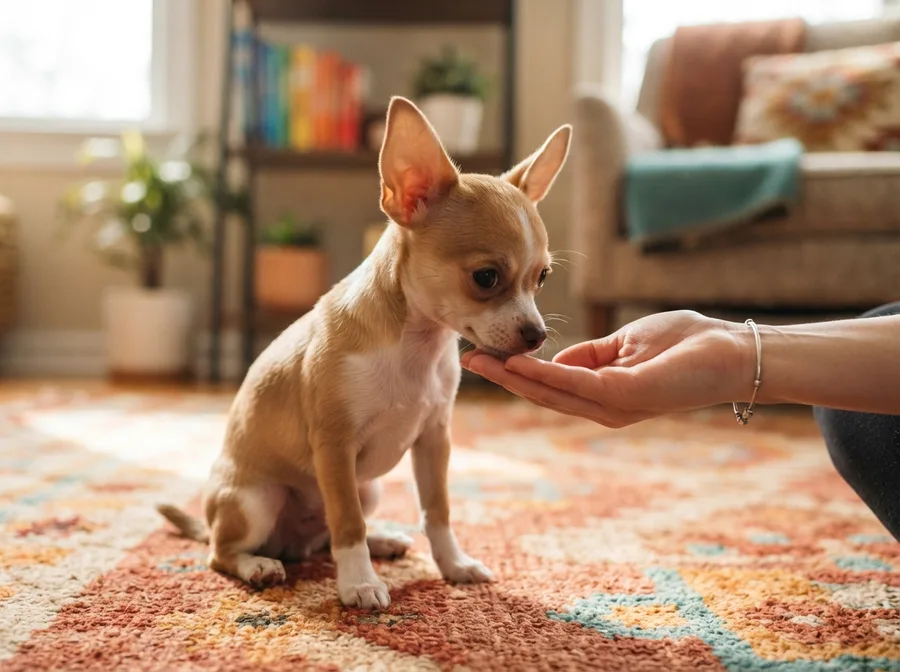
How do you socialise a Chihuahua puppy?
Start early, ideally by nine weeks, and make the most of the golden window that closes around sixteen weeks. Give calm, positive exposure to people, other dogs, everyday sounds, varied surfaces and gentle handling. Let the puppy walk on its own four feet instead of carrying it through every scare, and reward the calm moments rather than soothing the fear. Done well, this raises a confident dog instead of a fearful, yappy one.
The yappy stereotype is not the breed, it is a missed window
Almost everything people fear about this breed, the trembling, the snapping at strangers, the endless yappy alarm at the door, traces back to one thing, and it is not the Chihuahua’s character. It is a puppy that was never socialising with the world at the age when its brain was built to accept it. Socialisation is the single biggest lever you have over who your dog becomes, bigger than parentage, bigger than luck.
A Chihuahua is a bold little animal by default. Raised well, it grows into a confident, sociable companion that greets guests, rides the lift, and settles in a cafe without a fuss. Raised in a bubble, that same boldness curdles into fearful defensiveness, because a two kilogram dog that thinks the world is dangerous has only one tool: noise, and then teeth. The good news is that the difference is almost entirely in your hands in the first few months.
This guide is the antidote to the snappy stereotype. It covers the golden window, exactly what to expose your puppy to, why you should let it walk on its own four feet instead of scooping it up, and why rewarding calm (not soothing fear) is the whole game.
What good socialisation buys you
- A confident dog, not a fearful one
- Far less nuisance barking later
- A puppy that accepts handling and grooming
- Calm around strangers, children and other dogs
- A dog you can actually take places
- Prevention that is far easier than a later fix
The golden window: roughly weeks 8 to 16
Puppies have a sensitive developmental period, often called the golden window, that runs from about three weeks to around sixteen weeks of age. During this stretch a puppy’s brain treats new experiences as normal and files them away as safe. After it closes, novelty is far more likely to be met with suspicion. For a toy breed you bring home at around nine weeks, that leaves a precious few weeks of prime exposure time, roughly weeks 8 to 16, and you do not get them back.
This is why waiting until the full vaccination course is finished before doing anything at all is a quiet mistake. By the time a puppy is sixteen weeks old and fully covered, the most valuable window has largely shut. The sensible middle path is to socialise safely in the meantime: carry the puppy to see the world before it can walk on pavements, invite calm vaccinated adult dogs to your home, use clean private spaces, and let it experience household life fully. Ask your vet how to balance disease caution with this once only chance.
Miss the window and you are not doomed, but you move from easy prevention to slower, patient rehabilitation. Hit it, and confidence becomes your Chihuahua’s factory setting.
Do not wait for the last jab to start
- The prime socialisation window closes around 16 weeks
- Full vaccination often finishes right as it shuts
- Socialise safely in the meantime: clean spaces, healthy known dogs
- Carry to watch the world before pavements are safe
- Ask your vet how to balance caution with this one-time window
What to expose your puppy to (and how)
Good socialisation is not just meeting dogs. It is a broad, gentle diet of the whole human world, delivered in small, positive doses so the puppy files each thing as ordinary. Think in categories: people of all kinds, other dogs, everyday sounds, different surfaces underfoot, and being touched all over. The aim is variety at low intensity, never flooding a small puppy with something overwhelming.
Keep every session short and upbeat. Let the puppy choose to approach rather than dragging it forward, pair each new thing with a treat or praise, and stop before it tires. Quality beats quantity: five calm, happy encounters teach far more than one long, stressful outing. And keep the puppy warm, because a chilled, shivering Chihuahua is not learning, it is coping.
The table below is a working checklist. You will not tick every box in a week, and you should not try. Spread it across the golden window, repeat the wins, and always let the puppy set the pace.
| Category | Examples to introduce calmly |
|---|---|
| People | Men, children, hats and umbrellas, wheelchairs, delivery riders |
| Other dogs | Calm, healthy, vaccinated adult dogs; gentle friendly puppies |
| Sounds | Doorbell, blender, vacuum, traffic, thunder recordings, corridor noise |
| Surfaces | Tile, grass, metal grates, wet floors, wobbly and shiny surfaces |
| Handling | Paws, ears, mouth, nail clippers shown, brush, being gently held |
| Places | Lift, car, void deck, vet waiting room for a treat and out |
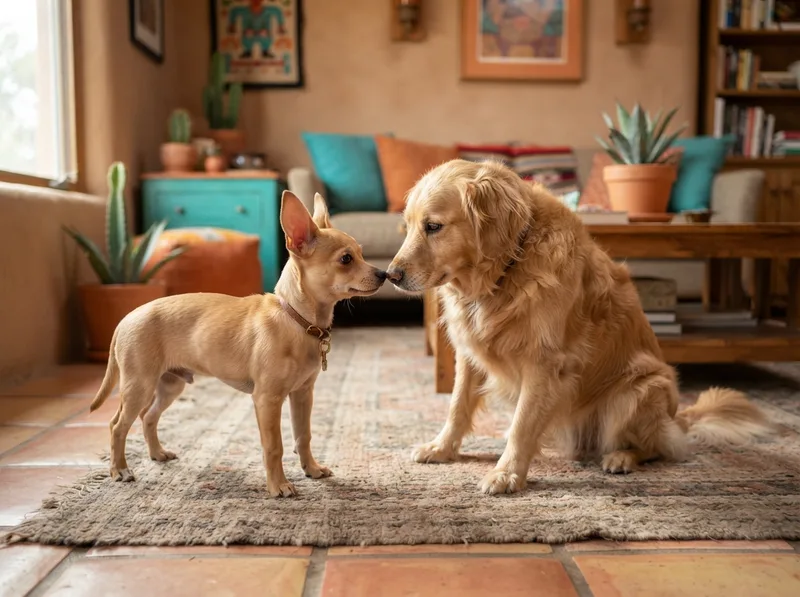
Let the puppy walk on its own four feet
Here is the habit that quietly manufactures the anxious Chihuahua: carrying it through every scare. A dog trots past, the puppy stiffens, and up it goes into your arms. It feels kind. It teaches the exact wrong lesson. Lifted away from every challenge, the puppy learns two things: the world is genuinely threatening, and it never has to cope because a human will always rescue it. That is the blueprint for fear-reactivity.
Whenever it is safe, let your Chihuahua meet the world on its own four feet. Let it walk up to the new surface, sniff the strange object, watch the other dog from a comfortable distance and decide for itself that nothing bad happened. Your job is to stay relaxed and let your calm travel down the lead. Small dogs read us closely; a loose lead and an easy voice tell the puppy there is nothing to fear.
None of this means marching a frightened puppy into things. If it is genuinely overwhelmed, add distance and try easier next time. The line is simple: support the puppy, do not rescue it from ordinary life. Coddling builds fear; gentle independence builds confidence.
A Chihuahua carried through every scare learns the world is dangerous. A Chihuahua that walks through it on its own four feet learns it is not.
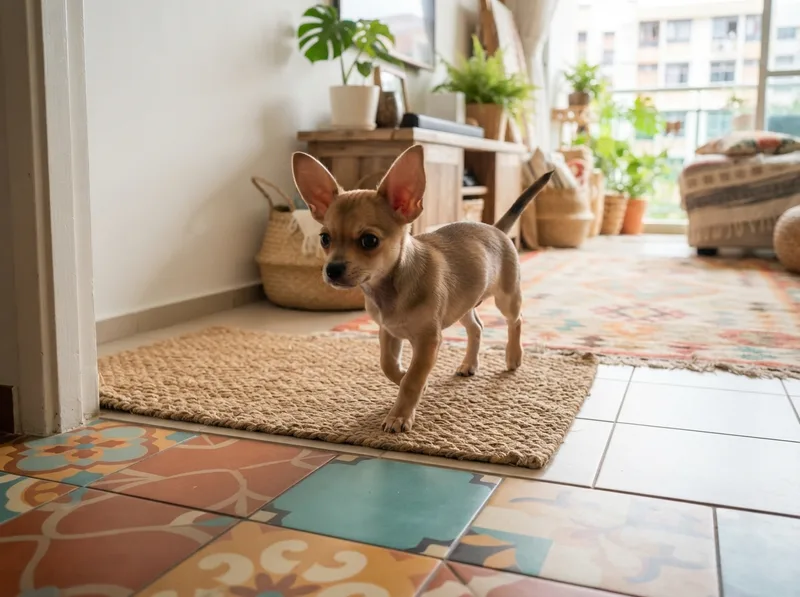
Reward calm, never soothe the fear
This is the piece most owners get backwards, and it matters enormously. When a puppy trembles or barks at something and you cuddle, shush and coo, your warmth is a reward, and you have just paid the dog for being afraid. You will not comfort the fear away; you will reinforce it. Instead, reward the moments of calm. The instant the puppy relaxes, looks away from the trigger, or breathes out, that is when the treat and the soft praise appear.
Build a quiet cue early, before barking becomes a habit. Let the puppy make a little noise, say your chosen word once in a level voice, and the moment it pauses, mark that silence and reward it. You are teaching that quiet, not noise, is what pays. Started at eight or ten weeks this is easy; left until a year of rehearsed alarm-barking it is a much longer road. Prevention, again, beats cure.
Put it together and the method is consistent: broad gentle exposure during the golden window, plenty of unhurried handling so grooming and vet visits are never a battle, four feet on the ground wherever it is safe, and calm rewarded while fear is met with matter-of-fact confidence rather than fuss. That is how you raise the bold, friendly Chihuahua the memes never show, and how you avoid the yappy one they do.
We send every puppy home with a written socialisation plan, not just a starter kit, and our care advice line is there for the wobbles. If you would like to talk through raising a confident Chihuahua from day one, WhatsApp us at +65 8220 6408.
Keep exploring
Frequently asked questions
When should I start socialising my Chihuahua puppy?
As soon as it is home, usually around nine weeks, and safely even before the vaccination course is complete. The prime window closes around sixteen weeks, so the early weeks matter most. Ask your vet how to balance disease caution with this one-time opportunity.
What is the golden socialisation window?
A sensitive developmental period from about three to sixteen weeks when a puppy readily accepts new experiences as normal. Positive exposure during this window builds a confident dog; missing it makes fearfulness far more likely later.
Can I socialise my puppy before it is fully vaccinated?
Yes, safely. Carry it to watch the world, invite calm healthy vaccinated adult dogs to your home, and use clean private spaces rather than dog parks or dirty pavements. Waiting for the last jab often means missing the whole window.
Why is carrying my Chihuahua everywhere a problem?
Lifting it away from every scare teaches the dog the world is dangerous and that it never has to cope. That is how fear-reactivity is built. Whenever it is safe, let the puppy meet the world on its own four feet.
Should I comfort my puppy when it is scared?
Soothing, cuddling and cooing at a frightened puppy rewards the fear and reinforces it. Instead stay calm and matter-of-fact, add distance if needed, and reward the moment the puppy relaxes. You reward calm, not the fear.
How do I stop my Chihuahua becoming yappy?
Socialise broadly during the golden window, reward calm rather than noise, and teach a quiet cue early before barking becomes a habit. A well-socialised Chihuahua has far less reason to alarm-bark in the first place.
What should I expose my Chihuahua puppy to?
People of all kinds, calm healthy dogs, everyday sounds, varied surfaces underfoot, and gentle handling of paws, ears and mouth. Keep sessions short and positive, let the puppy choose to approach, and keep it warm and unstressed.
Meet your Chihuahua
Come say hello at Balestier
2 Balestier Road #01-701, Singapore 320002 · Weekdays 12pm–6pm · Weekends 10am–6pm. Or message us first: tell us about your home and routine, and we'll tell you honestly if a Chihuahua fits.
Still deciding?
Read the price guide first: every dollar explained, no surprises at the shop.
See the price guide