Training & temperament
Are Chihuahuas good with kids? The honest, age-by-age answer
Not the marketing yes, the real one. A Chihuahua is too fragile for a toddler, but a devoted companion for gentle older children, supervised and given a safe retreat. Here is where the line falls.
Nelson and Kim, Curious Tails · AVS licence AS24J00046· Updated 24 July 2026
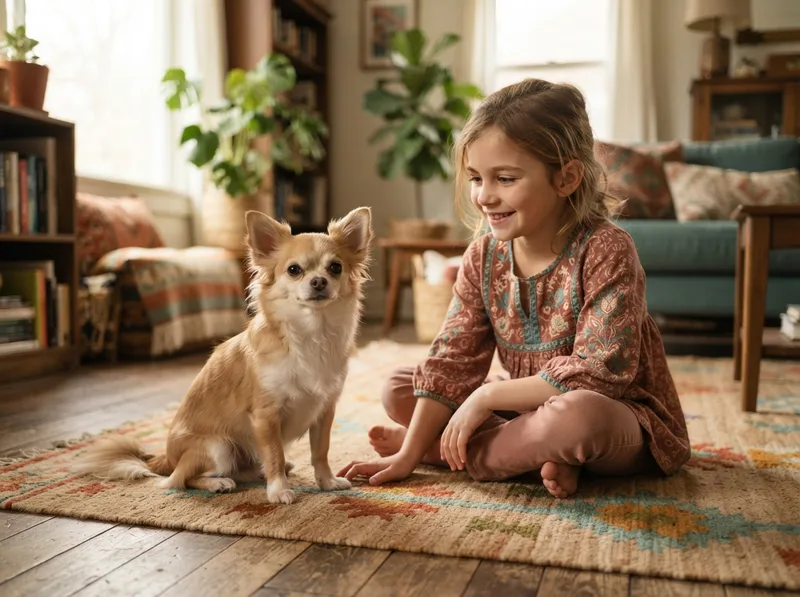
Are Chihuahuas good with kids?
It depends on the child's age. A Chihuahua is fragile, with light bones, so it is not a toddler dog: a fall or squeeze can cause a real injury, and a cornered dog may snap in self-defence. With gentle, older children who respect the dog, it can be a devoted family dog, always supervised, always with a safe retreat. The issue is a breakable animal needing care, not a bad temperament.
The honest answer, before the marketing one
Ask most sellers whether a Chihuahua is good with children and you will get a cheerful yes, because a yes closes a sale. We would rather give you the honest answer, because getting this wrong hurts a child or a dog, and often both. Here it is: a Chihuahua can be a wonderful, devoted family dog for the right household, and a poor, stressful choice for the wrong one, and the deciding factor is almost entirely the age and temperament of the kids.
The reason is physical before it is anything else. A Chihuahua is genuinely fragile: it has light bones, a tiny frame, and a self-belief far bigger than its body. A fall from a child’s arms, a squeeze from an over-excited hug, or a trodden paw can cause a real injury to a dog this small. This is not a robust, bouncy breed that shrugs off rough play. It is a delicate animal that needs the whole household to respect its size.
So the guidance on this page is not "Chihuahuas are bad with kids." It is more useful than that: here is exactly when a Chihuahua and children work beautifully, when they do not, and the rules that make the difference.
The short version
- Not a toddler dog: too fragile for the under-fives
- Wonderful with gentle, older children
- Always supervised, always with a safe retreat
- A frightened Chihuahua may snap to defend itself
- The issue is fragility and respect, not a bad temperament
- Household calm matters as much as the dog
Why a Chihuahua is not a toddler dog
Let us be specific about the toddler problem, because it is the most important line on this page. Very young children, roughly under five, are not being naughty when they grab, squeeze, poke or fall onto a dog. They simply do not yet have the fine motor control or the impulse braking to be reliably gentle, and you cannot supervise closely enough, every second, to guarantee a small dog is never caught by surprise.
Pair that with a two or three kilogram dog with light bones and the maths is unkind. The risk runs both ways. The dog can be hurt, a dropped or squashed Chihuahua can suffer a fracture, and the child can be hurt, because a startled or cornered dog that has no other option may snap in self-defence. Neither is the dog being vicious and neither is the child being bad; it is a mismatch of a breakable animal and an age that cannot yet handle breakable things.
So when a family with a boisterous toddler asks us for a Chihuahua, we will often, honestly, steer them toward a sturdier breed or a later time. That is not us talking ourselves out of a sale for fun. It is us trying to make sure the dog you buy is one your home can actually keep safe and happy for its long life.
Why the under-fives are the wrong match
- Toddlers cannot yet be reliably gentle or careful
- Light bones fracture from a fall or a squeeze
- A cornered dog may snap in self-defence, not malice
- You cannot supervise every single second
- Better: a sturdier breed now, or a Chihuahua later
A snap is self-defence, not a bad dog
It is worth sitting with this idea, because it reframes everything. When a small dog growls or snaps, people call it aggressive and blame the breed. But put yourself in the dog’s paws: you are the size of a slipper, something ten times your weight is looming and grabbing, and you cannot escape. A growl is not a threat to be punished; it is a polite warning, the dog saying "please stop" before it has to do anything else. Punish the growl and you simply remove the warning, leaving a dog that goes straight to the snap.
The lesson is to respect the communication and remove the need for it. A Chihuahua that always has a way out, and children who are taught never to corner or chase it, almost never has to escalate. Fear, not wickedness, is behind nearly every small-dog bite, and fear is something a household designs out with space, calm and handling rules.
This is why we describe the ideal as gentle, older children rather than any particular number on a birthday cake. A calm seven-year-old who listens can be perfect; a wild nine-year-old may not be. Judge the child in front of you, not the age on paper.
A growl is not bad manners from the dog. It is the dog asking for the manners it is owed. Respect it, and the snap never has to come.
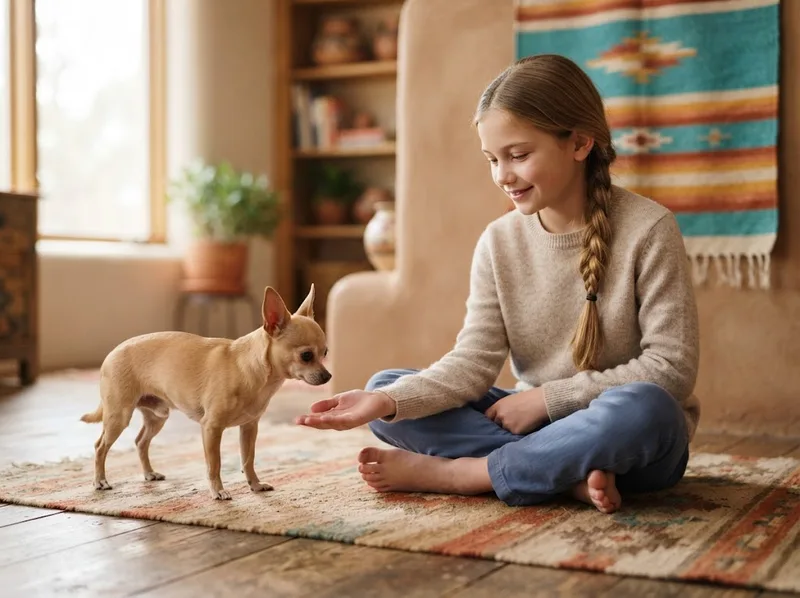
An age-by-age guide
There is no single yes or no, so here is a rough map by age. Treat it as a guide to the conversation, not a rulebook, because a specific calm child can beat the average and a specific rough one can fall short. The constant across every row is the same: any interaction between a Chihuahua and a child is supervised, and the dog always has a safe retreat it can reach without being followed.
The other constant is teaching the child, not just managing the dog. Children who learn to sit still and let the dog come to them, to stroke gently along the back rather than grab, and to leave the dog completely alone when it is eating, sleeping or in its bed, become the kind of people a Chihuahua adores. That education is your real project, and it pays off for every animal the child will ever meet.
| Child age | Honest verdict |
|---|---|
| Toddler (under ~5) | Not recommended. Too fragile; cannot yet be gentle or careful. |
| Young child (~5 to 7) | Case by case. Only if calm and closely supervised, with firm rules. |
| Older child (~8 to 12) | Often lovely, if the child is gentle and respects the dog. |
| Teen | Usually excellent; can be a wonderful bonded companion. |
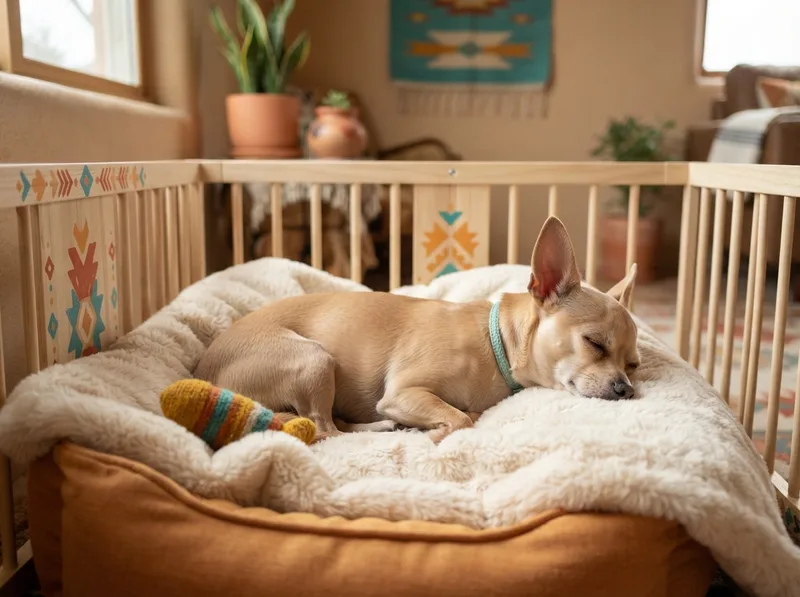
The rules that make it work
If your household is a good fit, a Chihuahua and older children can be a genuine joy: a devoted little shadow that adores its people and gives years of loyal company. The way you get there is a short list of non-negotiable house rules, taught to the children and enforced by the adults, plus the physical setup that makes the rules easy to keep.
Give the dog a safe retreat, a crate or a bed in a quiet corner, and make it sacred: when the Chihuahua is in there, it is invisible and left alone. Keep interactions calm and on the floor, so there is no height to fall from. Teach "let the dog come to you," never chase, never pick it up roughly, and always be careful and gentle. Supervise, every time, until you would trust this child with this dog without watching, which for younger kids is a long way off. And let children help with feeding and training, because a child the dog associates with good things is a child the dog will love.
Do all of that and you are not fighting the breed, you are setting it up to shine. If you want help working out whether a Chihuahua suits your family right now, honestly, WhatsApp us at +65 8220 6408. We would rather match you to the right dog at the right time than sell you the wrong one today.
House rules for kids and a Chihuahua
- The dog's bed or crate is a safe retreat: leave it alone in there
- Let the dog come to you; never chase, grab or corner it
- Interactions on the floor, calm, and always supervised
- Never disturb the dog while it eats or sleeps
- Involve children in feeding and gentle training
Keep exploring
Frequently asked questions
Are Chihuahuas good with children?
With gentle, older children who respect the dog, yes, they can be wonderful, supervised and with a safe retreat. They are not a toddler's dog: they are fragile and may snap in self-defence if frightened or hurt. The child's age and temperament decide it.
Can a Chihuahua live with a toddler?
We generally advise against it. Under-fives cannot yet be reliably gentle, and a Chihuahua's light bones are easily injured by a fall or squeeze. A startled dog may also snap. A sturdier breed now, or a Chihuahua later, is usually the safer choice.
Why did my Chihuahua snap at my child?
Almost always fear or pain, not malice. A cornered or startled small dog snaps to defend itself when it has no escape. Give the dog a safe retreat, teach the child not to chase or grab, and never punish a growl, which is just a warning.
At what age can a child handle a Chihuahua safely?
It depends on the child more than the number, but gentle children of around eight and up are often a good fit. Judge the individual child's calm and self-control, keep interactions supervised, and always give the dog a way to retreat.
How do I teach my kids to handle a Chihuahua?
Teach them to let the dog come to them, to stroke gently along the back rather than grab, to stay on the floor, and to leave the dog completely alone when it eats, sleeps or is in its bed. Supervise every interaction until you would trust it unwatched.
Are Chihuahuas a good family dog?
They can be, for families with gentle older children who understand the dog is small and breakable. They are devoted and loyal. Families with very young children are usually better served by a sturdier breed until the kids are older.
Should I punish my Chihuahua for growling at the kids?
No. A growl is a warning, the dog asking for space before it escalates. Punish it and you remove the warning, leaving a dog that goes straight to a snap. Instead, respect the growl, give the dog room, and fix the situation that caused it.
Meet your Chihuahua
Come say hello at Balestier
2 Balestier Road #01-701, Singapore 320002 · Weekdays 12pm–6pm · Weekends 10am–6pm. Or message us first: tell us about your home and routine, and we'll tell you honestly if a Chihuahua fits.
Still deciding?
Read the price guide first: every dollar explained, no surprises at the shop.
See the price guide