Training & temperament
How to stop Chihuahua barking: teaching the off-switch
Yes, Chihuahuas alert-bark. No, you are not stuck with a nuisance. Teach a quiet cue, stop paying the dog to bark, desensitise the doorbell, and keep the peace through close HDB walls.
Nelson and Kim, Curious Tails · AVS licence AS24J00046· Updated 24 July 2026
How do you stop a Chihuahua barking?
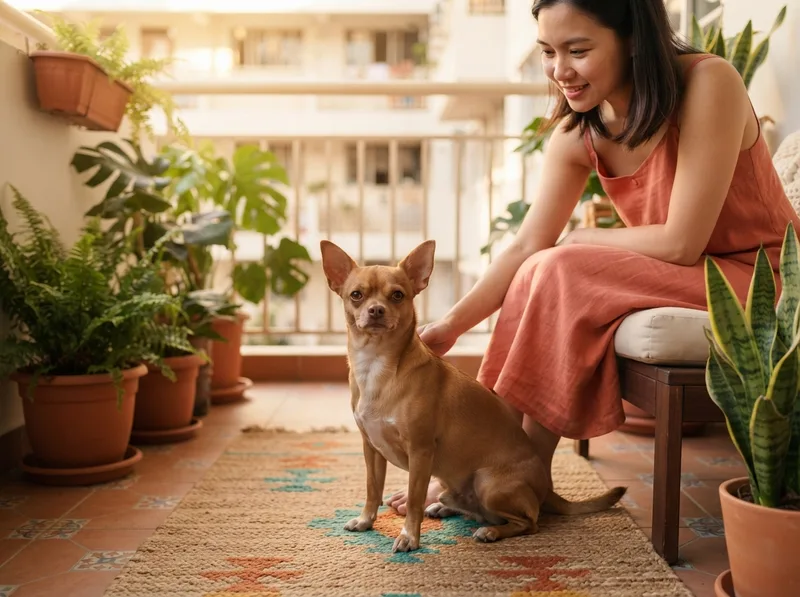
Stop rewarding it: give a barking Chihuahua no attention, and reward the moment it goes quiet. Teach a "quiet cue" as a reliable off-switch, and desensitise the repeating triggers like the doorbell and corridor sounds by pairing them with a treat at low intensity. Meet the dog’s needs so a bored dog is not alarm barking out of frustration, and apply it all with consistency. Because HDB walls are close, this protects your neighbours too.
Why Chihuahuas bark, and why that is not a life sentence
Let us start with the reputation, because Chihuahua barking is the thing that ends up in every meme. Yes, this breed is vocal by wiring. A Chihuahua is an alert dog that takes its guarding job seriously, and its default answer to a footstep in the corridor or a knock at the door is to sound off. That instinct is normal, and a well-placed bark or two is genuinely useful. The problem is never the first bark; it is the twenty that follow, on repeat, at everything.
The reassuring truth is that constant barking is a trained behaviour as much as an instinct, which means it is trainable in the other direction too. A Chihuahua barks so much because, over and over, barking has worked: it got attention, or a treat to hush it, or it appeared to make the scary thing go away. Change what barking earns, teach a reliable off-switch, and calmly take the fear out of the triggers, and the volume drops dramatically.
This guide is practical, kind and effective. No shock collars, no shouting, which only adds to the noise. Just the four things that actually work: never reward the barking, teach a quiet cue, desensitise the triggers, and be honest about the neighbours through those close HDB walls.
The four levers that quiet a Chihuahua
- Never reward barking with attention or treats
- Teach a clear "quiet" cue as an off-switch
- Desensitise the doorbell and corridor sounds
- Meet needs first: a bored, lonely dog barks more
- Reward the calm, every single time
- Consistency from everyone in the home
Rule one: stop paying the dog to bark
The most common mistake is also the most understandable. The dog barks, you want it to stop, so you look at it, talk to it, pick it up, or hand over a treat. To a Chihuahua, all of that is attention, and attention is a paycheck. You have just paid the dog to bark, and it will invoice you again tomorrow. Even scolding counts: to a dog that wants engagement, being told off is still engagement.
So the first rule is blunt: when your Chihuahua is barking for attention or demand, give it nothing. No eye contact, no words, no touch. Turn away, stay boring, and wait. The instant the barking stops, even for a breath, that silence is what you notice and reward. It feels counter-intuitive because the barking often gets briefly worse before it fades, an extinction burst, as the dog tries harder at the thing that used to work. Hold the line through it and the behaviour extinguishes.
A crucial caveat: this ignore-the-barking rule is for attention and demand barking, not for a dog that is frightened or in pain. Fear barking is met with calm distance and counter-conditioning, not stony silence. And you can only ignore a bark you have not already fed for years, which is why starting the moment a puppy comes home, alongside early socialisation, is so much easier than undoing a habit.
Things that accidentally reward barking
- Looking at or talking to the barking dog
- Picking it up to soothe it
- Handing over a treat or chew to buy quiet
- Shouting, which reads as you joining in
- Letting the barking make you open the door
Teach the "quiet" cue: the off-switch
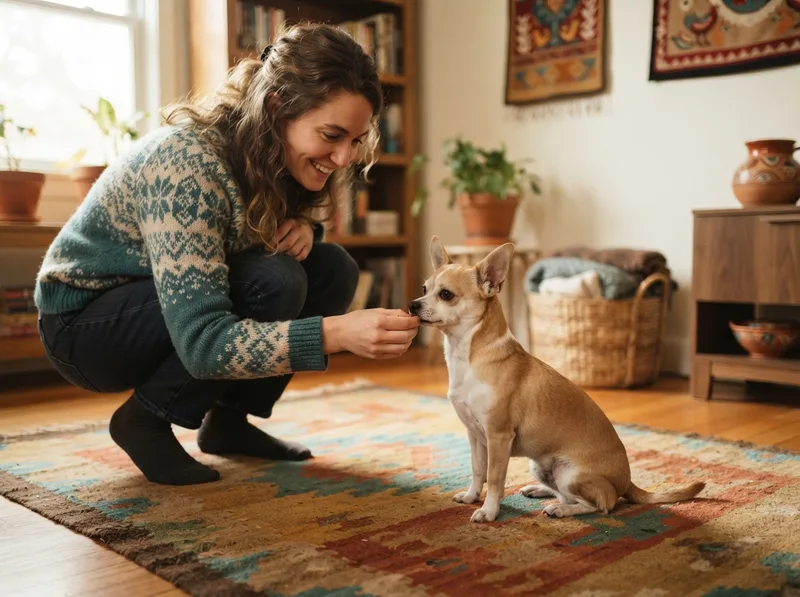
A dog cannot learn to be quiet on cue if it never hears the word paired with the right moment. The quiet cue is the off-switch you install deliberately. The neat trick is to teach it alongside a calm "speak", so the dog learns both the on and the off. Let a natural bark happen, wait for the split second of silence, say your chosen word once in a level voice, then mark and reward that silence immediately.
Keep the mechanics simple and consistent. Pick one word, "quiet" or "enough", and never chant it ten times, which just becomes background noise. Say it once. Reward only genuine silence, not a quieter grumble. Start in an easy setting with no trigger present, then add mild distractions as the dog succeeds. Sessions should be short, upbeat and frequent, a couple of minutes a few times a day beats one long drill.
Over a week or two the pattern clicks: bark, hear "quiet", stop, get paid. Soon the word alone ends the barking, because your Chihuahua has learned that silence, not noise, is what earns the good stuff. That is a real, reliable off-switch, built kindly, and it is worth more than any anti-bark gadget on the shelf.
Desensitise the triggers: the doorbell and the corridor
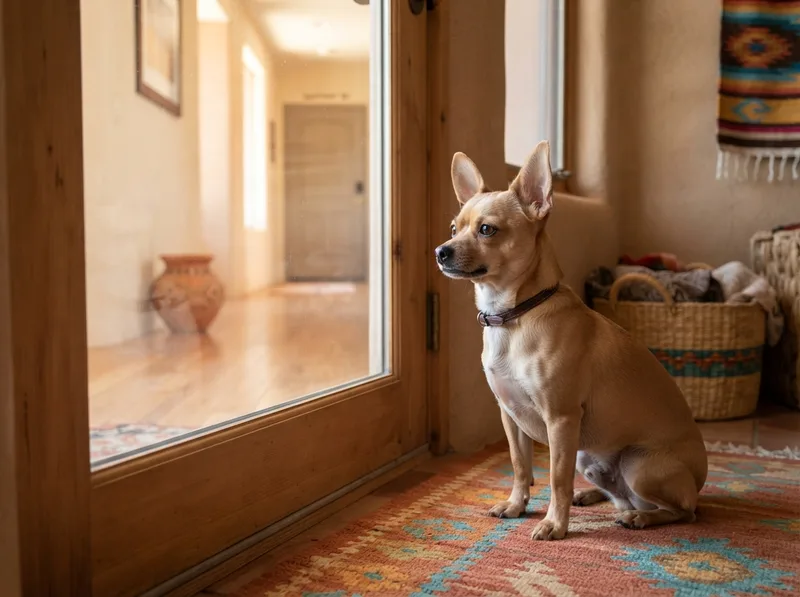
Much Chihuahua noise is alarm barking at specific, repeating events, and in a Singapore flat two triggers dominate: the doorbell and the sounds in the corridor outside. The fix is to change how the dog feels about the trigger, not just to suppress the reaction. This is desensitisation and counter-conditioning, and it is gentler and more durable than any correction.
Work the doorbell like this. Play a recorded bell at a low, barely-noticeable volume and immediately feed a small treat, so the sound predicts good things rather than an intruder. Repeat, nudging the volume up only as the dog stays relaxed. For the corridor, reward calm when neighbours pass, and manage the environment in the meantime: a frosted film or a barrier so the dog is not tracking every shadow under the door removes a lot of the fuel. You desensitise at a distance the dog can cope with, then close the gap slowly.
Do not forget the ordinary causes underneath the noise. A Chihuahua that is bored, under-exercised, or left alone too long barks more, full stop. Meet the needs first, a good walk, a puzzle feeder, company, and you are training a settled dog rather than fighting a frustrated one.
| Trigger | What to do instead of letting it rehearse |
|---|---|
| Doorbell | Play it faintly, treat, raise volume only while calm |
| Corridor footsteps | Reward quiet, block the under-door sightline |
| Other dogs passing | Add distance, feed for calm, close the gap slowly |
| Being left alone | Build alone-time gradually; leave a chew and enrichment |
| Boredom | Exercise and a puzzle feeder before it barks, not after |
The HDB honesty: close walls, good neighbours
Here is the part a lot of guides skip, and we will not. Most Singapore Chihuahuas live in an HDB flat, and HDB living means close walls and shared corridors. A Chihuahua’s bark is high and carrying, and a dog that alarm-barks all afternoon while you are at work is a genuine problem for the neighbours on the other side of that wall, not just an annoyance for you. Barking is one of the most common causes of neighbour disputes, and it is worth taking seriously before it becomes one.
The good news is that everything above is exactly what protects your neighbours too. A Chihuahua is a well-loved HDB dog precisely because, trained properly, it is small, quiet enough and content indoors. The work is teaching the off-switch, desensitising the triggers, meeting the dog’s needs, and applying it all with total consistency from everyone in the home, because a rule half the family ignores is no rule at all. If barking spikes suddenly, rule out pain or a medical cause with your vet first.
Raise a Chihuahua this way and you get the best of the breed: an alert little companion that tells you when someone is at the door, then settles on cue, and a corridor full of neighbours who never think twice about the dog next door. If you would like help choosing and raising a Chihuahua that suits flat life, WhatsApp us at +65 8220 6408.
Before you blame the breed
- Rule out pain or illness if barking suddenly increases
- A bored or lonely dog barks more; meet needs first
- Everyone in the home must apply the same rules
- Sudden all-day barking often means separation distress, not defiance
Keep exploring
Frequently asked questions
Why does my Chihuahua bark so much?
Chihuahuas are wired to alert-bark, but constant barking is usually learned: it earned attention, a treat, or seemed to make a scary trigger go away. Change what barking earns, teach a quiet cue, and desensitise the triggers, and it drops sharply.
How do I teach a Chihuahua to be quiet on cue?
Let a natural bark happen, wait for a beat of silence, say your word once in a calm voice, then mark and reward the silence immediately. Use one word, reward only genuine quiet, and keep sessions short and frequent.
Should I ignore my Chihuahua when it barks?
For attention and demand barking, yes: give no eye contact, words or touch, and reward the moment it stops. But do not ignore a frightened or hurting dog. Fear barking needs calm distance and counter-conditioning, not silence.
How do I stop my Chihuahua barking at the doorbell?
Desensitise it. Play a recorded bell at a very low volume and feed a treat, so the sound predicts good things. Raise the volume only while the dog stays calm. Never let the barking be what makes you open the door.
How do I stop barking at corridor sounds in an HDB flat?
Reward calm when neighbours pass and remove the fuel: block the under-door sightline with a barrier or frosted film so the dog is not tracking every shadow. Desensitise from a distance it can cope with, then close the gap slowly.
Will my Chihuahua barking annoy my HDB neighbours?
It can. HDB walls are close and a Chihuahua bark carries, so all-day barking is a real neighbour issue, not just yours. The training here protects them too. If barking spikes suddenly, rule out pain or separation distress first.
Do anti-bark collars work on Chihuahuas?
We do not recommend shock or spray collars. They add fear to an already sensitive small dog and do not teach it what to do instead. A taught quiet cue plus desensitising the triggers is kinder and far more reliable.
Meet your Chihuahua
Come say hello at Balestier
2 Balestier Road #01-701, Singapore 320002 · Weekdays 12pm–6pm · Weekends 10am–6pm. Or message us first: tell us about your home and routine, and we'll tell you honestly if a Chihuahua fits.
Still deciding?
Read the price guide first: every dollar explained, no surprises at the shop.
See the price guide