Types, coats & culture
The Chihuahua in Chinese: 吉娃娃, and what it means
吉娃娃 (jí wá wá) is the Chihuahua’s Chinese name, a sound-based term that happily reads as 'lucky little doll'. Here is how to say it, plus a bilingual buyer’s guide for Singapore.
Nelson and Kim, Curious Tails · AVS licence AS24J00046· Updated 24 July 2026
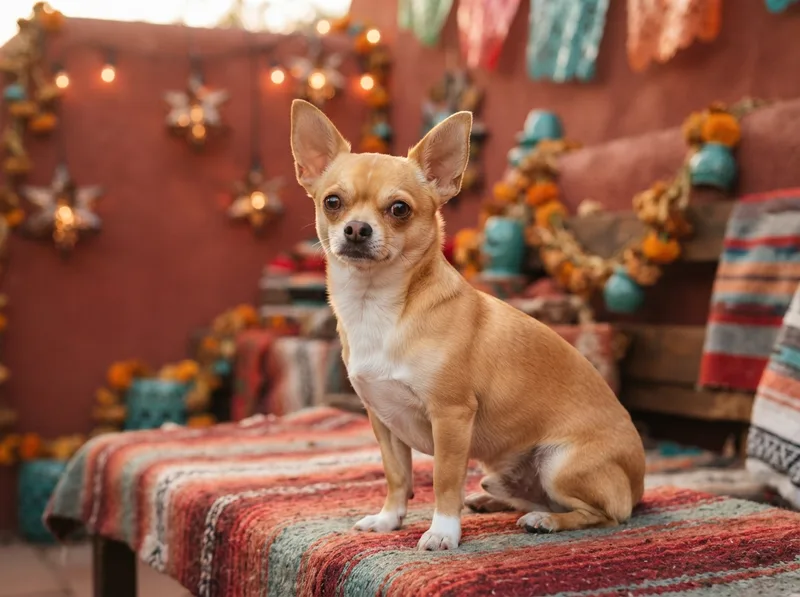
What is a Chihuahua called in Chinese?
The Chihuahua in Chinese is 吉娃娃, which in pinyin is jí wá wá, pronounced close to "chi-wa-wa". It is a transliteration chosen for its sound, though the characters happen to read as something like "lucky little doll" (吉 means auspicious). The same written name is used in Mandarin and Cantonese homes across Singapore. It tells you nothing about a puppy’s quality, so still ask about health screening and the patella check.
The Chihuahua in Chinese: 吉娃娃
The Chihuahua in Chinese is written 吉娃娃, and in pinyin that is jí wá wá. Say it out loud and you can hear what the name is doing: it is a transliteration, a set of characters chosen mostly because they sound like the English word Chihuahua rather than because they carry a hidden meaning. The three syllables jí, wá and wá land close to "chi-wa-wa", which is why the name travelled so neatly from Spanish into English and on into Mandarin.
There is a small, pleasant bonus in the character choice. The first character, 吉 (jí), commonly means lucky or auspicious, the same 吉 you see in festive phrases around Lunar New Year, while 娃 (wá) is the warm, affectionate character used for a baby or a little doll. So while nobody should over-read it, the written Chinese name lands as something like "lucky little doll", a rather charming fit for a two-kilogram dog with an outsized heart. Keep the claim modest though: it is a sound-based name first and a happy coincidence second.
For Singapore’s Mandarin-speaking owners that makes the name easy to remember and easy to say. Whether your family speaks English, Mandarin or Cantonese at home, 吉娃娃 is one of those breed names that crosses languages without friction, and it is the term you will hear in local pet shops, vet clinics and family group chats alike.
The name at a glance
- Chinese: 吉娃娃
- Pinyin: jí wá wá (close to "chi-wa-wa")
- 吉 = lucky / auspicious; 娃 = little doll or baby
- It is a transliteration (sound-based), not a translated meaning
- The same written name is used in Mandarin and Cantonese homes
- By far the most common spelling you will meet in listings
How to say it, and the other terms you will hear
Pronunciation first, because it trips people up. In Mandarin, jí wá wá uses a rising tone on jí and a high, level tone on each wá, but you do not need perfect tones to be understood. Say "jee-wah-wah" with a light lift on the first syllable and any Singaporean pet shop will know exactly what you mean. The English "Chihuahua" and the Chinese 吉娃娃 are close enough that switching mid-sentence, as many bilingual families do, causes no confusion at all.
You may also meet a handful of variant writings. Some older shops and forums use 奇娃娃 or 芝娃娃, again purely phonetic swaps of that first character, and you will occasionally hear the dog described simply as a small or toy dog in casual conversation. None of these change the breed; they are just spelling choices for the same sound. If you are searching listings online, 吉娃娃 is the version worth typing.
In Cantonese-speaking households the characters are read with Cantonese sounds, closer to "gat-waa-waa", but the written form is identical. That is the quiet advantage of a character-based name: the writing stays constant even when the pronunciation shifts between dialects, so a WhatsApp message reading 吉娃娃 is understood the same way whichever Chinese language the reader speaks.
For many Singaporean families this bit of flexibility is genuinely useful. Grandparents might say jí wá wá in Mandarin, the kids might say Chihuahua in English, and a Cantonese-speaking aunt might read the very same 吉娃娃 her own way, all pointing at the same small dog on the same sofa. You do not have to standardise any of it for the humans; only the dog needs one consistent name, and we will come back to that at the end.
A bilingual buyer’s guide for Singapore
If you or an older family member prefer to ask questions in Chinese, it helps to walk in with the key phrases ready. The important questions are the same in any language: is this a real, correctly sized toy breed dog, has it had proper health screening, and is the shop licensed. Below is a short bilingual cheat-sheet you can screenshot and use on the day.
Two questions matter most for this breed. First, ask about the patella check, the knee examination that flags the slipping-kneecap issue toy dogs are prone to. Second, and we cannot say this loudly enough, ask the shop where it stands on "teacup" sizing. A good shop will tell you plainly that there is no such size class, only undersized dogs sold at a markup. A seller who leans on the teacup word, in any language, is selling a marketing story rather than a healthy companion dog.
Bring the licence question too. Every dog sold in Singapore must come from an AVS-licensed shop, and you are entitled to see that number. Ours is AS24J00046, and we are happy to talk you through everything in English or Mandarin at +65 8220 6408.
| What to ask | English | Mandarin (with pinyin) |
|---|---|---|
| The breed | Is this a Chihuahua? | 这是吉娃娃吗?(zhè shì jí wá wá ma?) |
| Health | Has it had a vet health check? | 有做过健康检查吗?(yǒu zuò guò jiàn kāng jiǎn chá ma?) |
| Knees | Was the patella checked? | 膝盖检查了吗?(xī gài jiǎn chá le ma?) |
| Size honesty | How big will it grow? | 会长到多大?(huì zhǎng dào duō dà?) |
| Licence | What is your AVS licence number? | 执照号码是多少?(zhí zhào hào mǎ shì duō shǎo?) |
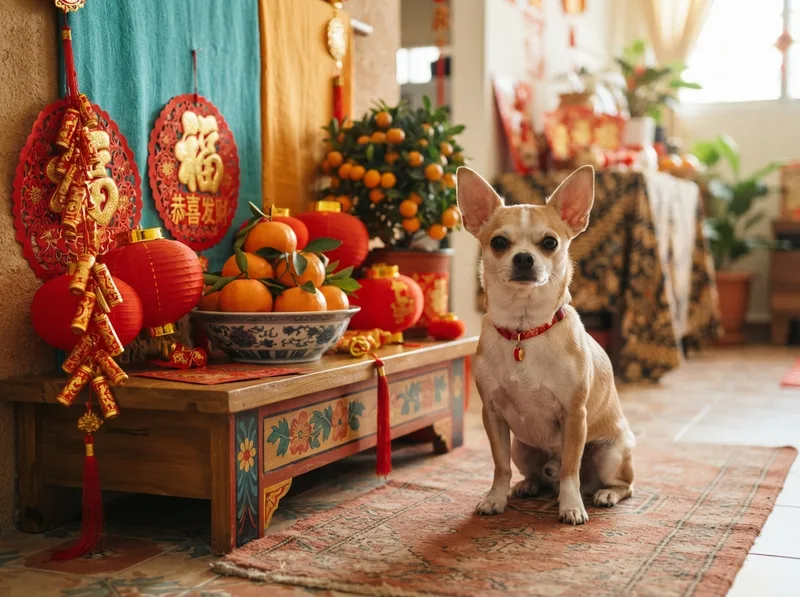
What the name does not tell you
A lucky-sounding Chinese name is charming, but it says nothing about the dog in front of you, and that is where buyers most often go wrong. 吉娃娃 describes every Chihuahua equally, the sturdy well-built ones and the fragile undersized ones a careless seller might push as "special". The name is not a quality mark. What tells you about quality is the health screening, the parents, the visible condition of the puppy, and the honesty of the shop.
Two traps deserve naming. The first is the "teacup" label, which is not a size or a type in any language; it is a marketing word for a runt-sized dog that too often comes with fragile bones, low blood sugar and a shorter life. We refuse it outright. The second is any "rare colour" premium; a Chihuahua’s coat comes in a huge range of colours and none of them justifies a higher price with us. If a listing pairs a cute Chinese name with a teacup or rare-colour pitch, read it as a warning sign.
The good news is that the real Chihuahua lives up to the lucky name on its own merits. It is the toy breed best suited to a compact HDB flat, one of the longest-living dogs you can own, and a fiercely devoted companion dog. Its temperament is the headline: bold, bonded and full of character, far more big-dog attitude than its size suggests. That, not the characters on the label, is what you are bringing home.
It helps to walk in knowing what a good Chihuahua actually looks like, since that is your real defence against a pretty name on a poorly bred puppy. Look for a lean, correctly built little dog that stands and moves with confidence, clear eyes, clean teeth for its age, and a shop willing to talk openly about the parents and the health screening. A dog that trembles constantly, feels alarmingly light, or is being pushed as unusually "tiny" is a warning sign no lucky name can cancel out. The name is the wrapping; the health is the gift.
The lucky name is a nice touch. The health check, not the characters, is what tells you the dog is really lucky.
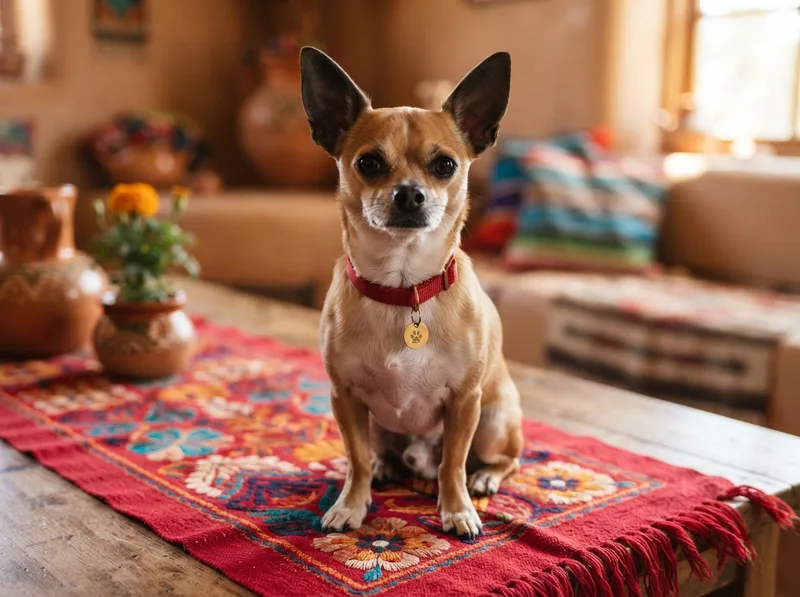
Bringing home your 吉娃娃
Once you have chosen, the language you speak at home barely matters to the dog, but consistency does. Pick one name and one set of cue words, in whatever language suits your family, and use them the same way every time. A Chihuahua learns a short, distinct Chinese name just as readily as an English one; what confuses a dog is chopping and changing, not the language itself. If you want ideas, our naming guide runs through short, easy-to-learn options including bilingual ones.
Whatever you call it, treat the early weeks as the foundation. Socialise the puppy gently and often so the bold temperament grows into confidence rather than yappiness, keep the coat and teeth on a simple care routine, and mind the aircon, because this is the one breed here that feels the cold rather than the heat. A warm bed away from the draught goes a long way.
If you would like to talk it through in English, Mandarin or Cantonese, message us at +65 8220 6408. We place healthy, correctly sized Chihuahuas from a licensed shop here in Singapore, both coats and both head types, at one honest price of $4,288–$4,888, and we are glad to answer every question on your list before you decide.
Keep exploring
Frequently asked questions
What is a Chihuahua called in Chinese?
A Chihuahua in Chinese is 吉娃娃, which in pinyin is jí wá wá and is pronounced close to "chi-wa-wa". It is a sound-based transliteration, and the same written name is used in Mandarin and Cantonese homes across Singapore.
Does the Chinese name 吉娃娃 have a meaning?
Mostly it is phonetic, chosen to sound like the English word. As a happy coincidence the characters read pleasantly: 吉 (jí) means lucky or auspicious and 娃 (wá) means little doll or baby, so it lands as something like "lucky little doll". Do not read too much into it, though.
How do you pronounce 吉娃娃?
Say "jee-wah-wah" with a light lift on the first syllable. You do not need perfect Mandarin tones to be understood. In Cantonese the same characters are read closer to "gat-waa-waa", but the writing is identical.
Are there other Chinese spellings for Chihuahua?
Yes, you may see 奇娃娃 or 芝娃娃 in older shops and forums, which just swap the first character for another same-sounding one. 吉娃娃 is by far the most common and the one worth searching.
What should I ask when buying a Chihuahua in Singapore?
Ask whether it is a correctly sized toy breed, whether it has had a vet health check and a patella check, and for the shop’s AVS licence number. Crucially, ask where the shop stands on "teacup" sizing; a good one will tell you there is no such size class.
Can a Chihuahua learn a Chinese name?
Absolutely. A Chihuahua learns a short, distinct Chinese name just as easily as an English one. What matters for the dog is consistency, using one name the same way every time, not which language it is in.
Is the Chihuahua a good HDB dog?
Yes. It is the smallest HDB-approved breed, long-lived, and suited to a compact flat. Just mind the aircon, since this is the one breed here that feels the cold rather than the heat, and give it a warm bed.
Meet your Chihuahua
Come say hello at Balestier
2 Balestier Road #01-701, Singapore 320002 · Weekdays 12pm–6pm · Weekends 10am–6pm. Or message us first: tell us about your home and routine, and we'll tell you honestly if a Chihuahua fits.
Still deciding?
Read the price guide first: every dollar explained, no surprises at the shop.
See the price guide