Teacup & size honesty
Keeping a Chihuahua at a healthy weight: the fat Chihuahua problem
The rounded, waddling Chihuahua is not cute, it is a dog being harmed. On a two-kilogram frame, obesity multiplies every risk. Here is the hands-on lean test and the habits that keep the weight off.
Nelson and Kim, Curious Tails · AVS licence AS24J00046· Updated 24 July 2026
How do I keep my Chihuahua at a healthy weight?
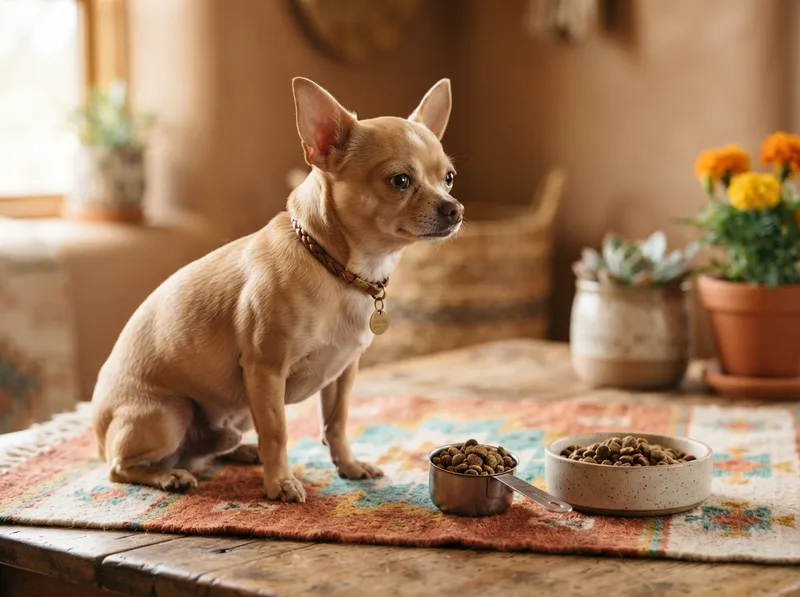
Treat a fat Chihuahua as a health problem, not a cute one: on a two to three kilogram dog, obesity multiplies the risks to the patella, trachea and heart. Use the hands-on body condition check, you should feel the ribs easily, see a waist from above and a tuck-up from the side. Keep the dog lean by measuring food to its ideal weight, counting treats inside the daily portion, and refusing table scraps. A lean Chihuahua has healthier joints and a longer life.
A fat Chihuahua is a health problem, not a cute one
We need to say the unpopular thing first: a fat Chihuahua is not a jolly, extra-cuddly version of the breed. It is a dog being quietly harmed. The rounder, waddling Chihuahua gets cooed over online, but on a two to three kilogram frame, carrying extra weight is one of the most damaging and most preventable things that can happen to your dog. Keeping a Chihuahua lean is close to the cheapest health insurance you will ever buy.
Obesity is worryingly common in toy breeds precisely because the signs sneak up slowly and because feeding a tiny, adoring dog feels like love. But a Chihuahua does not need much food, and it does not need our table. An overweight Chihuahua faces more joint pain, more breathing trouble, more strain on the heart, and, on average, a shorter life. None of that is affectionate.
The good news is that weight is the one big health lever almost entirely in your hands. This guide covers why the extra weight does so much damage on so small a dog, the simple hands-on test to check your dog’s body condition, and the practical habits, portioning, counting treats, resisting the table, that keep a Chihuahua at a healthy weight for a long life.
Why lean wins
- Less strain on knees, windpipe and heart
- Easier movement and more playful energy
- Lower risk of diabetes and joint disease
- Cheaper vet bills over a lifetime
- A measurably longer, more comfortable life
- The single most controllable health factor you have
Obesity is the great multiplier
The reason weight matters so much in this breed is that a Chihuahua already carries a few structural vulnerabilities, and extra weight makes every one of them worse. Vets sometimes call obesity a multiplier, because it does not create just one problem, it amplifies all of them at once.
Start with the knees. Patella luxation, the slipping kneecap, is the breed’s most common orthopedic issue, and every extra gram loads those small joints harder, turning a mild, manageable knee into a painful, surgical one. Then the airway: a Chihuahua’s trachea is delicate, and a fat neck and chest press on an already narrow windpipe, worsening any tendency to a honking cough. And the heart: carrying excess weight makes the heart work harder for years, on a breed that can already develop valve disease with age. Add a raised risk of diabetes and heat intolerance, and the picture is clear. This is not vanity. It is the mechanics of a small body under a load it was not built for.
What the extra weight loads
- Knees: worsens patella luxation, the breed's top joint issue
- Windpipe: extra pressure aggravates a delicate trachea
- Heart: years of overwork on a breed prone to valve disease
- Raised risk of diabetes and reduced heat tolerance
- More pain, less play, and a shorter life
On a tiny dog, a little fat is a lot
Here is the scale problem people miss. On a Labrador, a couple of hundred grams is a rounding error. On a Chihuahua, it is a body-shape change. If a healthy Chihuahua weighs around 2.5 kilograms, then just 200 grams of extra fat is roughly eight percent of its entire body weight. Picture an average adult human putting on six or seven kilograms and you have the right sense of the burden.
That is why you cannot judge a Chihuahua’s weight by eye at a glance, and certainly not by the number of biscuits that feel generous to you. A few extra treats a day, a nightly scrap from your plate, one too-heaping scoop of kibble, and within weeks a lean dog has tipped into overweight without any single meal looking like too much. The margins are tiny, so the habits have to be tight.
~2.5 kg
Typical healthy adult weight
200 g
Extra fat that is a big deal
~8%
Of body weight that 200 g can be
1 to 5
Body condition score, aim for the middle
The hands-on lean test
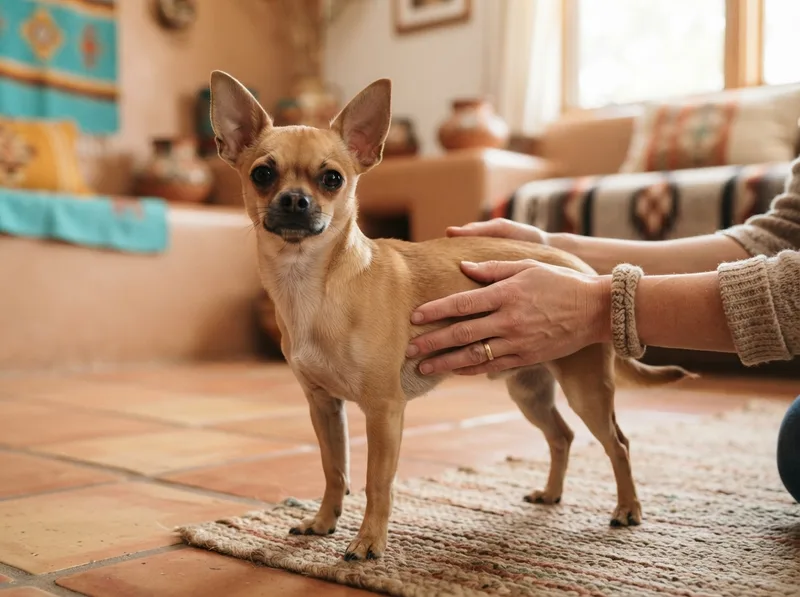
You do not need a vet scale to know if your Chihuahua is the right weight, though a check-up is always worth it. You need your hands and thirty seconds. Vets call it a body condition score, and it comes down to three simple feels. Do this regularly, because you see your dog every day and slow change is invisible until you deliberately check.
First, the ribs. Run your hands lightly along the dog’s sides. You should be able to feel the ribs easily under a thin layer, like feeling the bones on the back of your own hand. If you have to press through padding to find them, the dog is carrying too much. Second, the waist. Look down from above: a healthy Chihuahua narrows behind the ribs into a visible waist, an hourglass, not a sausage. Third, the tuck-up. Look from the side: the belly should rise up toward the back legs, not hang level or sag. Ribs easy to feel, a waist from above, a tuck-up from the side, that is a lean, healthy weight dog.
| Check | Lean and healthy | Too heavy |
|---|---|---|
| Ribs (by feel) | Felt easily under a thin layer | Hidden under padding, hard to find |
| Waist (from above) | Clear hourglass behind the ribs | Straight or bulging sides |
| Tuck-up (from side) | Belly rises toward the hips | Belly hangs level or sags |
How to keep a Chihuahua lean
Keeping a Chihuahua at a good weight is not about crash diets. It is a handful of unglamorous daily habits that, on so small a dog, make an enormous difference. None of them is hard once they are routine.
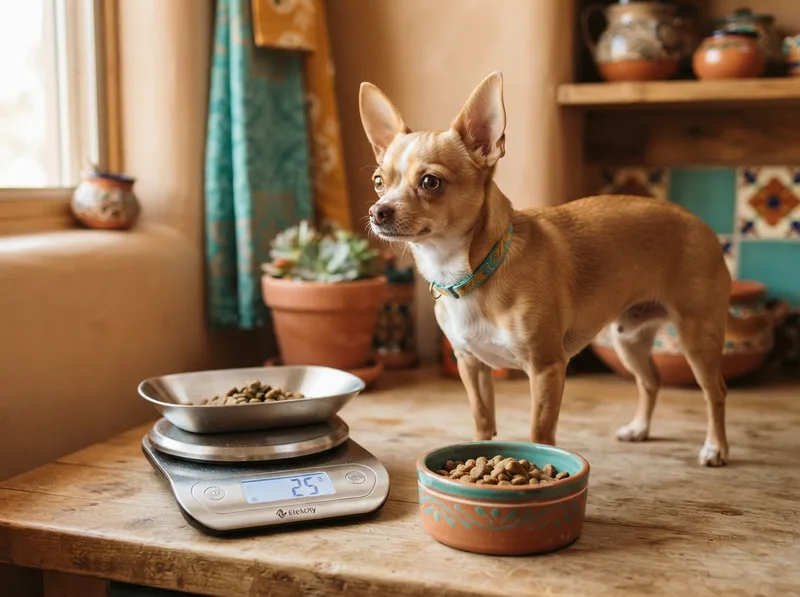
Measure the food, do not pour it. Use a proper scoop or scales and follow the guide on the food for your dog’s ideal weight, not its current one, then adjust from the body condition check. Measuring food instead of eyeballing it is the single biggest fix for most chubby toy dogs. Count the treats, and count them inside the daily total, not on top of it. Treats and training rewards should be no more than roughly a tenth of the day’s calories, so break them tiny, a Chihuahua does not care about the size of the piece. Resist the table scraps completely, because a morsel that is nothing off your plate is a meaningful portion of a two-kilogram dog’s day, and it teaches begging on top. And keep the dog moving with regular gentle walks and play, which is good for weight, joints and mood alike.
Do this and you protect the thing that makes this breed so special: its long life. A lean Chihuahua moves better, breathes easier, hurts less and, on the evidence, lives a longer life than a heavy one. That is a lot of return on a measuring scoop and a firm no at the dinner table. If you would like a feeding and weight plan tailored to your dog, WhatsApp us at +65 8220 6408, and always confirm target weight and any diet change with your vet.
The lean-Chihuahua habits
- Measure meals with a scoop or scales, to ideal weight not current
- Count treats inside the daily total, broken tiny
- No table scraps: a crumb to you is a portion to a Chihuahua
- Regular gentle walks and play every day
- Do the three-feel body check monthly and adjust
- Confirm target weight and any diet change with your vet
Keep exploring
Frequently asked questions
Is my Chihuahua fat?
Do the three-feel check. You should feel the ribs easily under a thin layer, see a clear waist from above, and see the belly tuck up from the side. If the ribs are buried, the sides bulge, or the belly hangs level, your Chihuahua is carrying too much weight.
How much should a healthy Chihuahua weigh?
Most healthy adult Chihuahuas sit under about three kilograms, often around two to two and a half. But shape matters more than the exact number: aim for a body condition where the ribs are easily felt and there is a visible waist and tuck-up.
Why is being overweight bad for a Chihuahua?
Obesity is a multiplier on a small dog. It worsens patella luxation and joint pain, presses on the delicate trachea, makes the heart work harder for years, and raises the risk of diabetes. It also tends to shorten the dog's life.
How many treats can a Chihuahua have a day?
Keep treats to no more than roughly a tenth of the daily calories, and count them inside the total rather than on top of meals. Break them into tiny pieces, since a Chihuahua values the reward, not the size, so the calories stay low.
How do I put my Chihuahua on a diet safely?
Measure meals to the dog's ideal weight, cut treats and stop table scraps, keep up gentle daily exercise, and reduce gradually rather than crash dieting. Recheck the body condition regularly and confirm the target weight and any diet change with your vet.
Are table scraps really that bad for a Chihuahua?
Yes. A morsel that is trivial to you is a meaningful portion of a two-kilogram dog's daily food, so scraps add up fast and unbalance the diet. They also teach begging. Feed a measured, complete diet and keep human food off the menu.
Can keeping my Chihuahua lean help it live longer?
The evidence points that way. A lean dog carries less strain on its joints, windpipe and heart, moves and breathes more easily, and tends to live a longer, more comfortable life than an overweight one. Weight is the most controllable health factor you have.
Meet your Chihuahua
Come say hello at Balestier
2 Balestier Road #01-701, Singapore 320002 · Weekdays 12pm–6pm · Weekends 10am–6pm. Or message us first: tell us about your home and routine, and we'll tell you honestly if a Chihuahua fits.
Still deciding?
Read the price guide first: every dollar explained, no surprises at the shop.
See the price guide