Teacup & size honesty
Why we will not sell you a teacup Chihuahua
Not because we cannot get one. Because teacup is a marketing word for a smaller, more fragile dog, sold at a premium for higher risk. Here is the plain, first-person why, and what we place instead.
Nelson and Kim, Curious Tails · AVS licence AS24J00046· Updated 24 July 2026
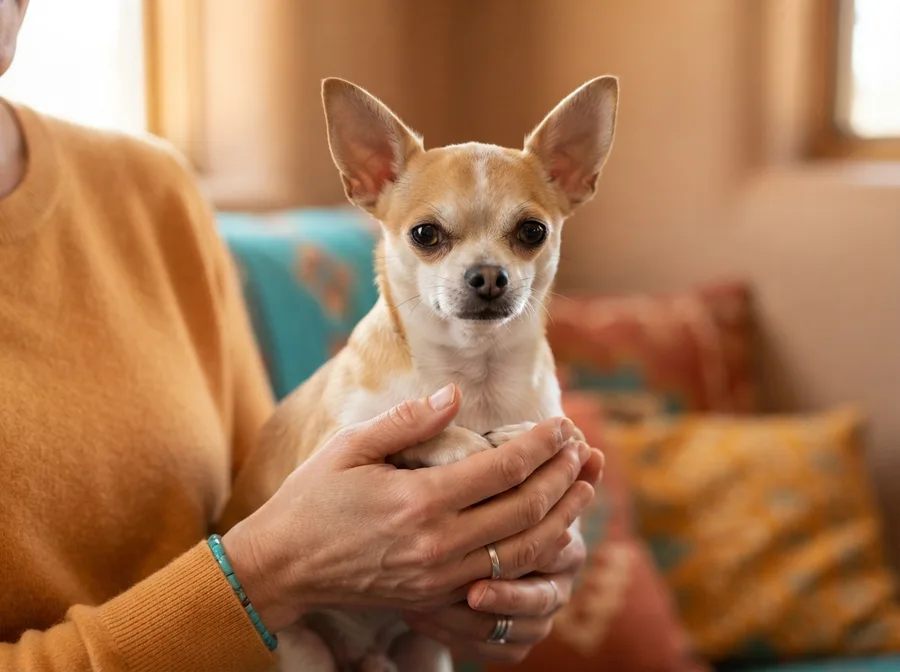
Why should you not buy a teacup Chihuahua?
Because "teacup" is a marketing label, not a real size class or breed standard, and the Chihuahua Club of America warns against it. It usually means the runt or a deliberately bred down, undersized dog, and it correlates with hypoglycemia, fragile bones, dental crowding and a shorter life. It is sold at a premium, which is the economics backwards. We refuse the label and place healthy, correctly sized dogs with a health screening record instead.
Why we will not sell you a teacup Chihuahua
People message us asking for a teacup Chihuahua most weeks, and our answer is always the same honest no. Not because we cannot get one, and not because it would not sell, it would sell fast and for more money. We say no because "teacup" describes a smaller, more fragile dog dressed up in a nicer word, and we are not willing to profit from that. This page is the plain, first-person version of why we refuse the label, and what we place instead.
We are a licensed shop, AVS licence AS24J00046, and we have placed 25+ Chihuahuas. Every one of them was healthy and correctly sized. None was sold as a "teacup", "micro" or "pocket" anything, because those are not sizes we can sell you in good conscience. If that costs us a few sales to breeders who will promise you a two-pound dog, we are at peace with it.
Here is the thing most buyers do not realise until we explain it: you can have a genuinely tiny Chihuahua without the label and without the risk. The label does not get you a smaller dog. It gets you a riskier one, at a higher price. Let us walk through why.
Our position, in one box
- We do not sell or market teacup, micro or pocket dogs
- "Teacup" is a sales word, not a size or a standard
- It usually means the runt or a deliberately bred-down dog
- It correlates with real, serious health problems
- It is sold at a premium, which is the economics backwards
- We place healthy, correctly sized Chihuahuas instead
"Teacup" is a marketing word, not a size
Start with the fact that undoes the whole thing: teacup is not a real category. It is not a breed, not a variety, and not a size class. Neither "teacup" nor "micro" nor "pocket" appears in any kennel club breed standard, and it never has. It is a marketing label, invented to sell the smallest puppies at the highest prices.
You do not have to take our word for it. The Chihuahua Club of America, the breed’s own parent club, warns buyers directly against the term. The recognised standard describes a single Chihuahua that should not exceed six pounds, and it does not sort the breed into sizes at all. So a "teacup" is simply a smaller individual of the one Chihuahua breed, with a word attached that adds price and risk but nothing real.
Once you see that, the sales pitch falls apart. A seller leaning on "teacup", "micro" or "pocket" is not offering you a rarer, finer dog. They are offering you an undersized one with better copywriting.
What the label actually means
- Not in any breed standard, ever
- The Chihuahua Club of America warns against the term
- The AKC standard does not classify the breed by size
- A "teacup" is just an undersized dog with a marketing name
Where "teacup" puppies actually come from
A puppy sold as teacup is usually one of two things. It is the runt of an ordinary litter, the smallest of the bunch, relabelled as premium. Or it is the product of deliberately breeding the two smallest adults together, generation after generation, to force the size down, which is what people mean when they talk about a dog that has been bred down. Both routes select for the same thing: fragility.
That matters because pushing a Chihuahua smaller does not shrink it evenly like a photo. It concentrates the very problems the breed already carries in a toy body: unstable blood sugar, weak knees, a delicate windpipe, an incomplete skull and a mouth with no room for its teeth. None of that is rare and special. It is predictable, and it is exactly why a responsible shop will not chase the trend no matter how well "teacup" sells.
The honest alternative is simple. Buy a well-bred Chihuahua, let its adult size be whatever healthy genetics deliver, and you will very likely still get a lap dog comfortably under three kilograms. Small is easy to get honestly. You never need to gamble on "teacup" to get it.
The health cost, honestly
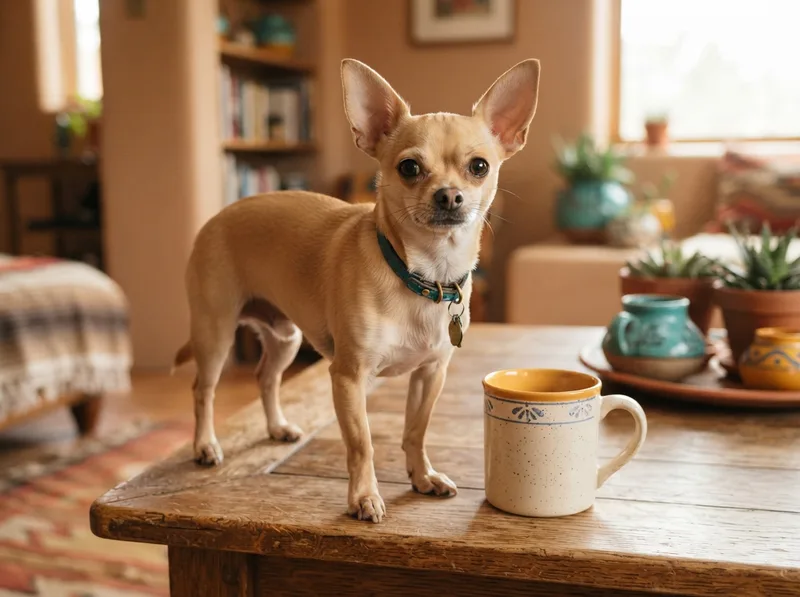
We will not throw invented statistics at you, because a lot of the scary numbers online are unsourced. What is well established is the direction of the risk: the smaller and more extreme the dog, the higher the chance of the problems below. Treat these as real, and always ask a vet about any individual dog.
Hypoglycemia is the headline danger. A tiny puppy’s blood sugar can crash suddenly, causing wobbliness, weakness, seizures, even death, and the smallest puppies need feeding little and often, sometimes every couple of hours, to stay safe. On top of that come the structural risks that track with extreme smallness: slipping kneecaps, a collapsing windpipe, an incomplete skull, and severe dental crowding in a jaw with no room. Undersized dogs also tend to have more fragile bones that break easily. Add it up and the picture is consistent: more emergencies, higher vet bills, and often a shorter life than a correctly built Chihuahua. The long, wonderful Chihuahua lifespan is precisely what extreme "teacup" breeding puts at risk.
We ask for parentage information and a health screening record on the dogs we place, including a patella check, because prevention beats a lifetime of emergencies. That is a lot harder to guarantee when a line has been bred purely for smallness.
Correlated with extreme small size
- Hypoglycemia: dangerous blood-sugar crashes
- Patellar luxation: slipping kneecaps
- Collapsing trachea: windpipe weakness
- Incomplete skull and associated risks
- Severe dental crowding in a tiny jaw
- More fragile bones and fractures
- Often a shorter life
The price is backwards, and what we place instead
Here is the part that should make anyone pause. "Teacup" listings almost always cost MORE, not less. Buyers are asked to pay a premium for a dog that is, on the evidence, more fragile and more expensive to keep healthy over its life. That is the economics of the label exactly backwards, and it only works because the word sounds cute and rare. You are paying extra for higher risk. Read that twice.
We opted out entirely. We price every healthy, correctly sized Chihuahua the same, in the band $4,288–$4,888, all-in, with no premium for being small, a particular colour, or anything else. When someone asks us for a teacup, we do not upsell it, we have this conversation instead. Most people, once they understand, thank us and go home with a healthy dog they will still have in fifteen years.
If you have already fallen for a teacup listing somewhere, you are not foolish, the marketing is genuinely good. But before you pay, ask the seller the expected adult weight as a healthy range not a "guaranteed under two pounds" promise, ask for a health record, and ask why the dog costs more than a standard one. The answers tell you everything. Or just message us at +65 8220 6408 and we will talk you through a real, correctly built Chihuahua honestly.
A teacup is not a rarer, finer Chihuahua. It is usually a smaller, riskier one, sold with a better word and a bigger price tag.
Keep exploring
Frequently asked questions
Why will you not sell a teacup Chihuahua?
Because "teacup" describes a smaller, more fragile dog sold with a nicer word. It is not a real size or breed standard, it correlates with serious health risks, and it is sold at a premium. We place healthy, correctly sized Chihuahuas instead and refuse the label.
Is teacup a real Chihuahua size?
No. Teacup, micro and pocket are marketing labels, not a size class or breed standard. The Chihuahua Club of America warns against the term, and the recognised standard does not classify the breed by size at all.
Where do teacup Chihuahuas come from?
Usually the runt of a normal litter relabelled as premium, or the result of breeding the two smallest adults together for generations to force size down. Both routes select for fragility and concentrate the breed's health risks.
Are teacup Chihuahuas unhealthy?
Extreme small size raises the risk of hypoglycemia, slipping kneecaps, a collapsing windpipe, an incomplete skull, severe dental crowding and fragile bones, and often a shorter life. We frame this qualitatively because much of the online statistics are unsourced, but the direction of risk is well established.
Why do teacup Chihuahuas cost more?
Because the label sells. It is the economics backwards: buyers pay a premium for a dog that is more fragile and more expensive to keep well. We refuse the term and price every healthy Chihuahua the same, with no premium for size.
Can I get a small Chihuahua without buying a teacup?
Yes, easily. A well-bred Chihuahua is usually comfortably under three kilograms as an adult, a genuine lap dog. You never need the "teacup" label to get a tiny companion; you need one bred for health and correctly sized.
What should I ask a seller offering a teacup?
Ask the expected adult weight as a healthy range rather than a guaranteed tiny number, ask for a health screening record including a patella check, and ask why the dog costs more than a standard one. Be wary of anyone leading with how small the dog will stay.
Meet your Chihuahua
Come say hello at Balestier
2 Balestier Road #01-701, Singapore 320002 · Weekdays 12pm–6pm · Weekends 10am–6pm. Or message us first: tell us about your home and routine, and we'll tell you honestly if a Chihuahua fits.
Still deciding?
Read the price guide first: every dollar explained, no surprises at the shop.
See the price guide